
Desert lime
Eremocitrus glauca (Lindl.) Swingle
Description
Growing requirements
The desert lime, scientifically known as Eremocitrus glauca, belongs to the Rutaceae family. It is a highly resilient shrub or small tree, uniquely adapted to the harsh environmental conditions of arid and semi-arid regions in Australia.
This species is globally recognized for its exceptional drought tolerance and ability to thrive in poor soils. It acts as a specialized xerophyte, possessing deep roots and specialized leaf structures that minimize water loss in extreme heat.
When cultivating desert lime, it is essential to ensure full sun exposure and excellent soil drainage. The plant is remarkably tolerant of saline conditions, which often prove fatal to other citrus varieties, making it an excellent candidate for challenging environments.
Climate-wise, the plant is adaptable, tolerating both high heat and moderate frost. While it is hardy, young trees require protection from severe winter extremes until they become well-established in the landscape.
Maintenance is relatively low compared to commercial citrus. Regular irrigation should be strictly controlled, as the species is sensitive to waterlogged conditions, which can lead to root rot and other physiological stressors.
Yield
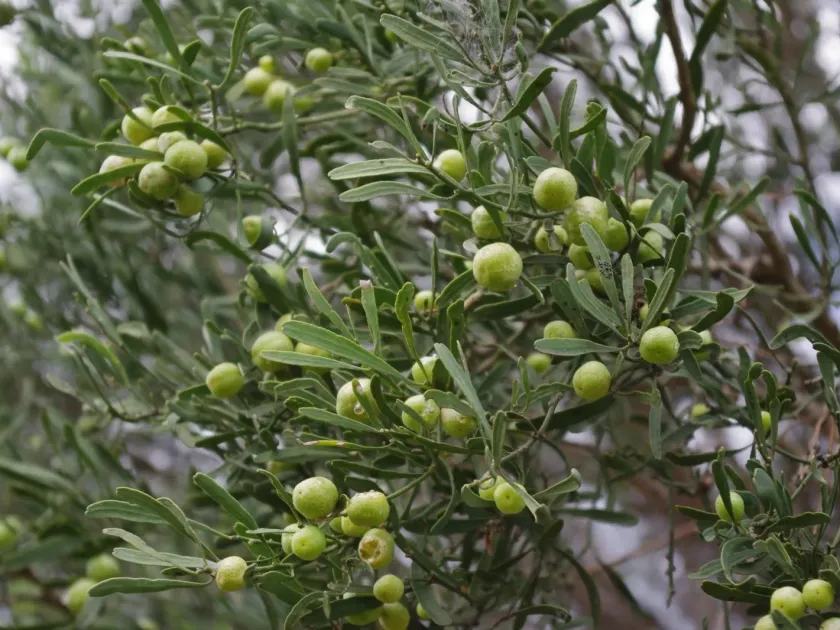
The fruit of Eremocitrus glauca is small, globose, and packed with an intense, pungent lime flavor. These fruits are highly prized in gourmet cuisine for their versatility in dressings, beverages, and desserts.
Yield capacity is influenced by environmental stress and cultivation methods. In a managed orchard setting, fruit production becomes significantly more reliable, offering a sustainable harvest for niche markets.
Harvesting is typically done by hand due to the nature of the shrub's architecture. The fruit's thick, resilient rind ensures a longer shelf life compared to more delicate commercial citrus fruits.
In addition to food production, the plant is extensively used in genetic research. It serves as a vital rootstock source, passing its superior drought and salt tolerance to grafted commercial citrus scions.
The economic value of desert lime continues to rise as demand for native "superfoods" increases, positioning it as a promising crop for sustainable, water-efficient agricultural systems in arid zones.
Main diseases and pests
Desert lime is naturally robust, but it can occasionally face challenges from pests and pathogens if grown in non-native, high-humidity environments. Monitoring is necessary to ensure consistent plant health.
Scale insects and aphids are the most common pests, as they target succulent new growth. Integrated Pest Management (IPM) practices, including the use of beneficial insects, are highly effective for maintaining the health of these trees.
Fungal infections, such as sootymold, can appear as a result of pest excretions or poor airflow within the canopy. Improving structural pruning and ensuring good ventilation is the most effective preventative measure.
- Annual canopy pruning to improve light and air penetration.
- Monitoring for pest colonization on leaf undersides.
- Ensuring soil surface remains dry between watering cycles.
- Removing debris around the base of the trunk to discourage pests.
Given its evolutionary history in harsh conditions, the desert lime maintains a strong natural resistance to several devastating diseases like citrus tristeza virus, which frequently impacts other commercial citrus species.