
Sorbaria kirilowii
Sorbaria kirilowii
Description
Growing requirements
Sorbaria kirilowii, commonly known as Kirilow's false spirea, is a deciduous ornamental shrub belonging to the Rosaceae family. Native to the mountainous regions of Northern China, it has gained popularity worldwide for its vigorous growth and striking appearance.
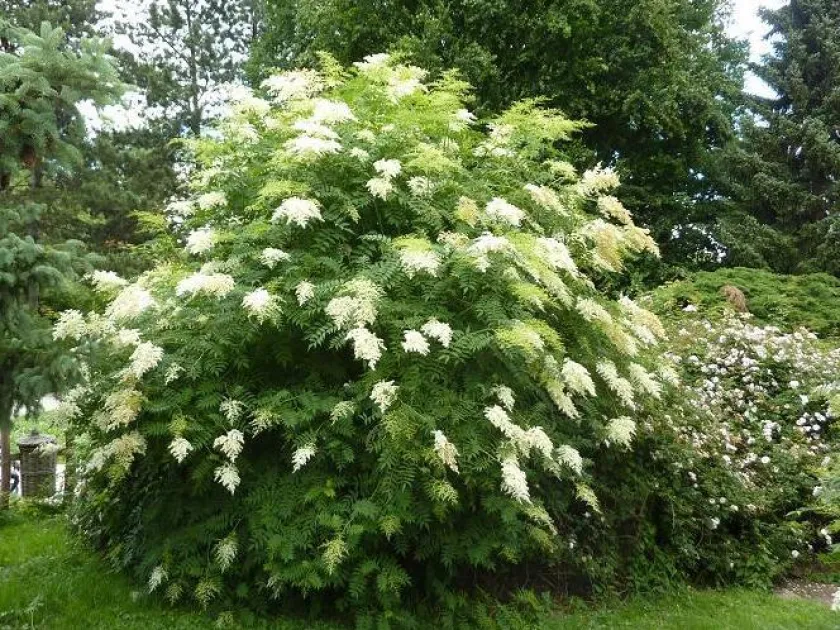
The botanical structure is defined by its large, pinnate leaves, which provide a lush, fern-like texture throughout the growing season. In mid-summer, the plant produces large, plume-like terminal panicles of tiny, fragrant white flowers that stand out prominently against the dark foliage.
The shrub thrives in moist, fertile, and well-drained soils, showing a preference for locations where water is consistently available. It is adaptable to various light conditions, though full sun exposure encourages the most abundant flowering and densest habit.
Cultivation practices primarily focus on managing its rapid expansion. Because it spreads via underground rhizomes, it is an excellent plant for erosion control on slopes. Regular maintenance involves pruning back old stems in early spring to encourage fresh, vigorous growth for the season.
The species is highly valued for its cold hardiness and robustness in diverse climates. It is relatively low-maintenance once established, making it a reliable choice for large-scale landscape projects, public parks, and wild-style gardens.
Main diseases and pests
The plant is generally resistant to most pests; however, in humid and poorly ventilated conditions, it may become susceptible to powdery mildew, which can be managed with proper thinning of the branches.
Aphids occasionally infest the soft, succulent tips of new growth during the warmer months. Monitoring during the spring flush is recommended to apply targeted treatment if infestation levels become significant.