
Aitchison's false spiraea
Sorbaria aitchisonii
Description
Growing requirements
Aitchison's false spiraea (Sorbaria aitchisonii) is a deciduous, hardy shrub belonging to the Rosaceae family. It is native to the temperate mountainous regions of the Western Himalayas and Afghanistan, where it thrives in rocky, well-drained habitats.
To ensure optimal growth, this plant requires a site with full sun or partial shade. It is highly adaptable to various soil types, provided that the soil is kept consistently moist but does not become waterlogged, which can be detrimental to root health.
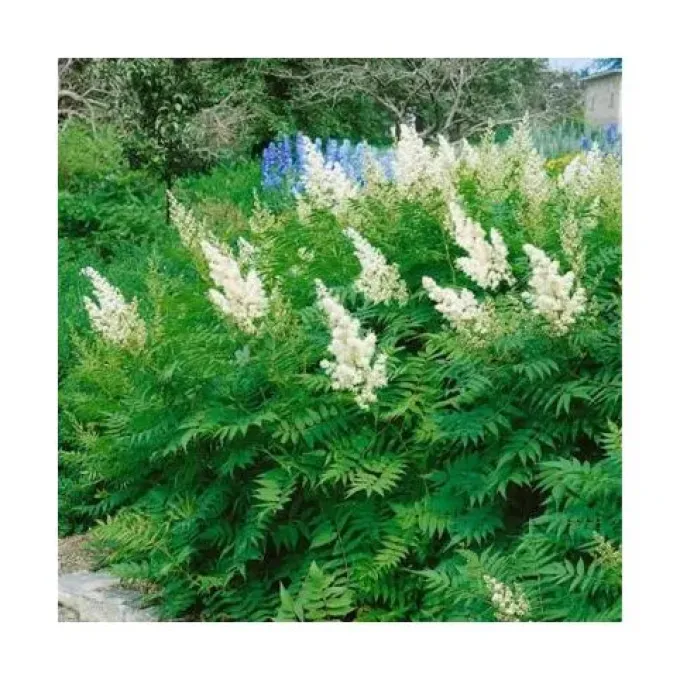
The plant is known for its remarkable winter hardiness. Its structural beauty is defined by pinnate, fern-like foliage and large, pyramidal clusters of white flowers that bloom in mid to late summer, attracting various pollinators to the garden.
Good horticultural practice involves regular pruning to maintain the desired shape and promote vigorous growth. As the shrub naturally tends to spread through suckering, routine removal of excess shoots is recommended to keep the plant within its intended boundaries.
In terms of usage, this shrub is an excellent choice for erosion control on slopes, border planting, or as a focal point in naturalistic landscaping. Its ability to tolerate urban pollution and various environmental stressors makes it a valuable asset for municipal gardening.
Main diseases and pests
Generally robust and disease-resistant, Aitchison's false spiraea may occasionally suffer from powdery mildew if planted in areas with poor air circulation or excessive shade.
Pests such as aphids and spider mites may occasionally infest new growth during hot and dry spells, necessitating the use of horticultural soaps or systemic insecticides to protect the plant's aesthetic value.