
Lawson's Clematis
Clematis lawsoniana
Description
Growing requirements
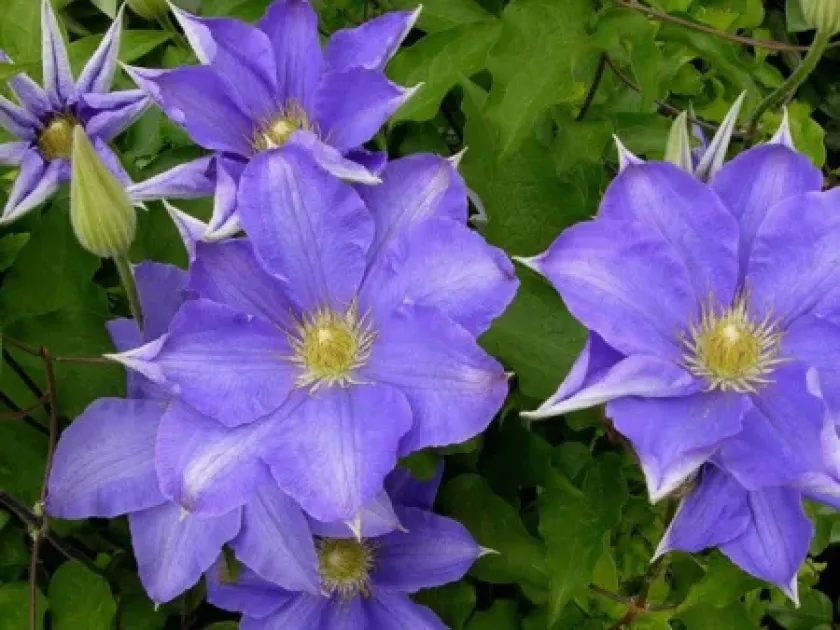
Lawson's Clematis (Clematis lawsoniana) is a perennial climbing plant belonging to the Ranunculaceae family. This hybrid variety is highly regarded for its large, distinctive flowers, making it a staple in ornamental horticulture.
This crop thrives in sunny locations but requires its root zone to be shaded and kept cool. Proper site selection involves choosing a spot protected from strong winds, which can damage the delicate stems and blooms.
The ideal soil is fertile, well-drained, and neutral to slightly alkaline. It is essential to ensure adequate soil aeration; heavy clay soils should be amended with organic matter or gravel to prevent root rot caused by standing water.
Cultural management includes providing a robust support structure for the vines to climb. Regular pruning is necessary to maintain shape and promote vigorous flowering; most pruning should be done after the primary blooming phase.
This species is widely used for vertical landscaping, effectively covering trellises, fences, and walls. Its ability to create dense, flowering screens makes it a valuable asset for creating privacy and vertical interest in gardens.
Main diseases and pests
The primary threat to the plant's health is Clematis wilt, a fungal disease that can cause sudden collapse of stems. Ensuring good air circulation and avoiding overhead watering are critical preventive measures for long-term survival.
Pests such as aphids and spider mites can infest the foliage, particularly during dry spells. Monitoring the leaves for signs of discoloration or webbing is essential, with prompt application of insecticidal soap or neem oil if infestations are noted.