
Rocket-larkspur
Consolida regalis Gray
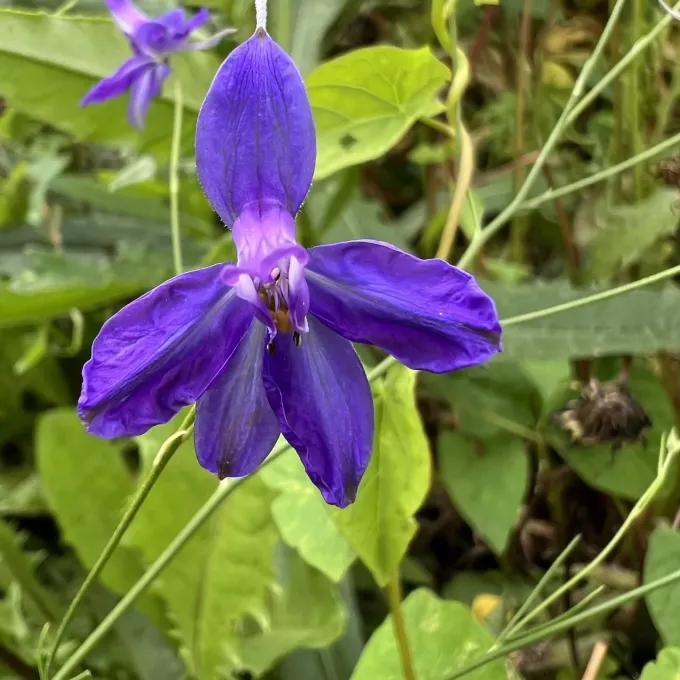
Description
Sowing dates
Rocket-larkspur (Consolida regalis) is an annual herbaceous plant belonging to the Ranunculaceae family. It is widely recognized in agriculture as a persistent weed that invades cereal crops across temperate regions.
The plant reproduces exclusively by seeds, which are highly durable and can remain viable in the soil for several years. Germination primarily occurs in late summer or early spring, making it a competitive early-season weed.
Biologically, the plant develops a taproot and erect, branching stems. Its rapid growth rate during the early spring allows it to establish itself effectively before crops can fully develop a canopy, leading to significant nutrient and water depletion.
Seed production is prolific, with individual plants producing thousands of seeds that easily disperse through wind and agricultural machinery. This reproductive success makes it a challenge for sustainable weed management.
Effective control strategies involve a combination of mechanical tillage and integrated weed management. Proper crop rotation, combined with the use of competitive crop varieties, remains the best defense against its establishment in cultivated fields.
Growing requirements
Consolida regalis thrives in temperate climates and is highly adaptable to various environmental conditions. It prefers open, sunny locations and is rarely found in densely forested or heavily shaded areas.
The plant exhibits a preference for carbonate-rich loam or clay soils. While it can tolerate a variety of soil types, its development is most vigorous in fertile, well-drained soils with a neutral or alkaline pH.
It requires moderate moisture during the germination and early seedling stages. Once established, the plant shows moderate drought tolerance, enabling it to survive in fields that experience fluctuations in rainfall.
Temperature plays a crucial role in its development; germination can begin at temperatures as low as 3-5 °C. This thermal flexibility gives rocket-larkspur an advantage over many crops in the early spring planting season.
In addition to soil and climate, the plant requires open ground to flourish. Its competitiveness decreases significantly when planted alongside vigorous crop varieties that establish a dense canopy rapidly.
Main diseases and pests
The plant is susceptible to various fungal pathogens, such as powdery mildew and leaf spot diseases, which can thrive under conditions of high humidity. These diseases can limit the spread of the weed in moist seasons.
Despite being toxic to many animals due to the presence of diterpenoid alkaloids, the plant is occasionally attacked by specialized insects. However, its chemical composition generally acts as a deterrent to most common pests.
In agricultural settings, the primary threat to the success of rocket-larkspur is the application of systemic herbicides. Compounds targeting broadleaf weeds are typically effective when applied during the plant's vegetative stage.
Soil-borne nematodes can sometimes impact root development, though this is rarely sufficient to eliminate a population. The plant's overall resilience often allows it to recover even after moderate environmental stress.
Due to its toxic nature, its presence in forage or hay is considered a serious issue for livestock producers. Contaminated crops should be carefully managed to ensure the safety of farm animals consuming the harvest.