
Rafflesia
Rafflesia
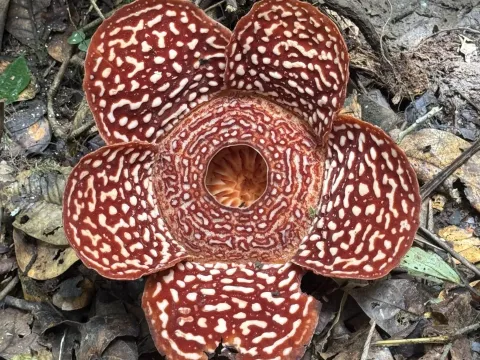
Rafflesia is a genus of parasitic flowering plants in the family Rafflesiaceae. It is famous for producing the largest individual flowers on Earth, lacking any visible leaves, stems, or true roots.
What the section contains

Rafflesia
The plant originates from the tropical rainforests of Southeast Asia. It survives as an endoparasite, living inside the host vines of the genus Tetrastigma, from which it extracts essential nutrients.
For the survival of the parasite, specific environmental conditions are required, including high atmospheric humidity and constant high temperatures typical of equatorial regions.
The soil type is irrelevant to the growth of Rafflesia, as it bypasses the need for soil nutrients by utilizing the vascular system of the host plant to sustain its metabolic processes.
Due to its complex obligate parasitic life cycle, Rafflesia is strictly a wild species. It is not classified as an agricultural crop and cannot be propagated through conventional farming methods.
The primary threat to the survival of the genus is the rapid destruction and fragmentation of primary tropical rainforests, which eliminates the essential host vines.
Climate change and altered rainfall patterns in the Southeast Asian tropics pose significant risks to the delicate balance required for the flower to emerge and bloom.
Habitat encroachment by agricultural expansion for oil palm and other commercial crops remains the most critical factor in the decline of wild Rafflesia populations.
Biological threats include the decline of specific pollinating insect populations that are attracted by the pungent odor of decaying organic matter emitted by the flower.
The slow life cycle of the plant, which may take years to produce a flower, makes the population recovery process extremely fragile and susceptible to human-induced disturbances.