
Rafflesia arnoldii
Rafflesia arnoldii
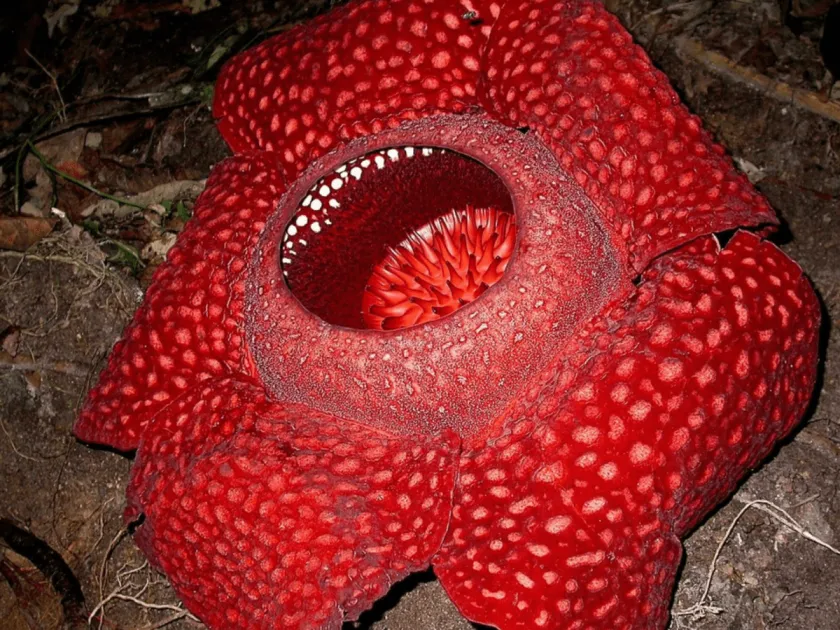
Description
Growing requirements
Rafflesia arnoldii is a member of the Rafflesiaceae family, classified as an obligate holoparasite. It lacks traditional vegetative structures like leaves, stems, or roots, functioning entirely as an endoparasite during most of its life cycle.
The plant relies exclusively on a host vine from the genus Tetrastigma to obtain water and nutrients. The vegetative phase consists of filaments that permeate the host's tissues, eventually emerging to produce a massive flower.
The natural habitat is restricted to the humid rainforests of Sumatra and Borneo. It requires specific ecological niches with high atmospheric moisture and stable tropical temperatures for the bud to reach maturity.
The species grows exclusively under the forest canopy, where light levels are very low. It does not perform photosynthesis, meaning its metabolic processes are entirely supported by the biochemical energy extracted from the host plant.
There is no agricultural practice for cultivating this species. Attempts to transplant or propagate Rafflesia in botanical settings have historically failed due to the complexity of the symbiotic relationship with its host and environment.
Main diseases and pests
The primary threat to Rafflesia arnoldii is the destruction of tropical rainforests. Deforestation leads to the removal of the host vines, which effectively terminates the survival of the parasite.
The species is highly susceptible to environmental fluctuations. Changes in humidity levels or temperature in the rainforest understory can prevent the successful development of the massive flower buds.
The decline in specific carrion-fly populations, which serve as the primary pollinators, poses a significant risk to the reproductive success of the species. Without effective pollination, the life cycle remains incomplete.
Habitat fragmentation due to agricultural expansion and logging poses an existential threat to isolated populations. The species requires intact wilderness to maintain the specific balance needed for its complex life history.
Disease outbreaks affecting the host Tetrastigma vines can lead to the death of the associated Rafflesia. Given its high level of specialization, the plant has almost no capacity to adapt to rapid environmental changes or anthropogenic pressures.