
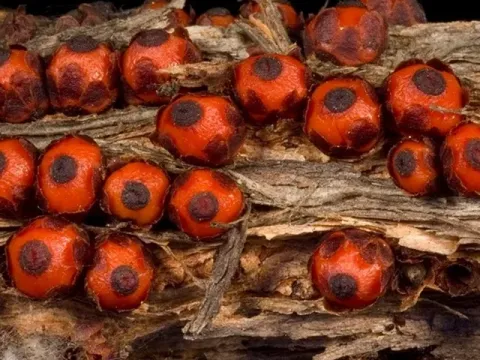
Pilostyles
Pilostyles
Pilostyles is a genus of obligate endoparasitic plants within the Apodanthaceae family. These fascinating organisms have evolved to lack chlorophyll, leaves, roots, and stems, existing primarily as a thread-like network of cells embedded within the tissues of their host plants.
What the section contains

Pilostyles
The plant is not a commercial crop but rather a biological parasite. Its lifecycle is entirely dependent on host plants, most commonly members of the legume family. It extracts nutrients directly from the host's vascular system, making it an ecological interest rather than a crop.
The distribution of Pilostyles includes various tropical and subtropical regions across the Americas, Africa, and Australia. Its habitat is determined strictly by the presence of suitable host species, which provide the physiological support required for the parasite to reach its flowering stage.
Growth requirements for Pilostyles are synonymous with the environmental conditions of its host. The parasite thrives in climates that favor the growth of its hosts, utilizing the host’s water and nutrient uptake mechanisms to sustain its internal development.
There is no agricultural usage for this organism. In a farming context, it is neither sown nor harvested, as it provides no economic value and is generally regarded as a biotic stressor that can diminish the vitality of affected woody plants or shrubs.
For agricultural practitioners, the presence of Pilostyles is a matter of concern. By diverting energy and resources from the host plant to itself, the parasite can cause branch dieback, stunted growth, and a significant reduction in the overall yield of the cultivated host.
Management strategies focus primarily on prevention and physical removal. Sanitation, which involves pruning and destroying infected plant parts, is the most effective way to prevent the spread of the parasite within a plantation or orchard setting.