
Pilostyles thurberi
Pilostyles thurberi
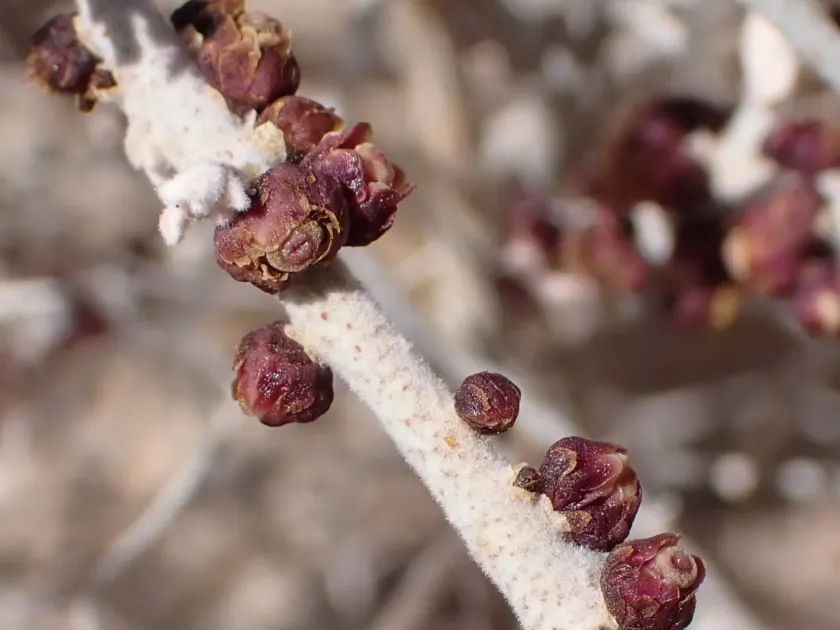
Description
Growing requirements
Pilostyles thurberi is a fascinating botanical entity belonging to the family Apodanthaceae. It is classified as an obligate endoparasite, meaning it lacks chlorophyll and a traditional root system, relying entirely on its host for biological survival and nutrient acquisition.
The native distribution of this species is limited to the arid desert regions of North America, particularly within the Sonoran and Mojave deserts. It specifically parasitizes woody shrubs, most notably species within the Psorothamnus genus, which provide the structural and chemical environment required for its growth.
The botanical structure of Pilostyles thurberi is highly reduced. Most of the plant exists as a network of thread-like tissues embedded deep within the xylem and phloem of the host. This unique adaptation allows it to siphon nutrients and water efficiently while remaining hidden from external environmental stresses.
In terms of climatic requirements, the plant is strictly bound by the survival range of its host species. Because it does not interact with the soil substrate directly, it has no specific requirements for soil composition, pH, or fertility, making its ecological niche entirely dependent on host availability.
As a biological entity, this species is not utilized in conventional agriculture. It serves as a subject of intense scientific curiosity regarding plant evolution, specifically exploring how organisms lose complex structures like leaves and roots to adopt a fully parasitic life cycle in harsh environments.