
Doryopteris pedata
Doryopteris pedata (L.) Fee
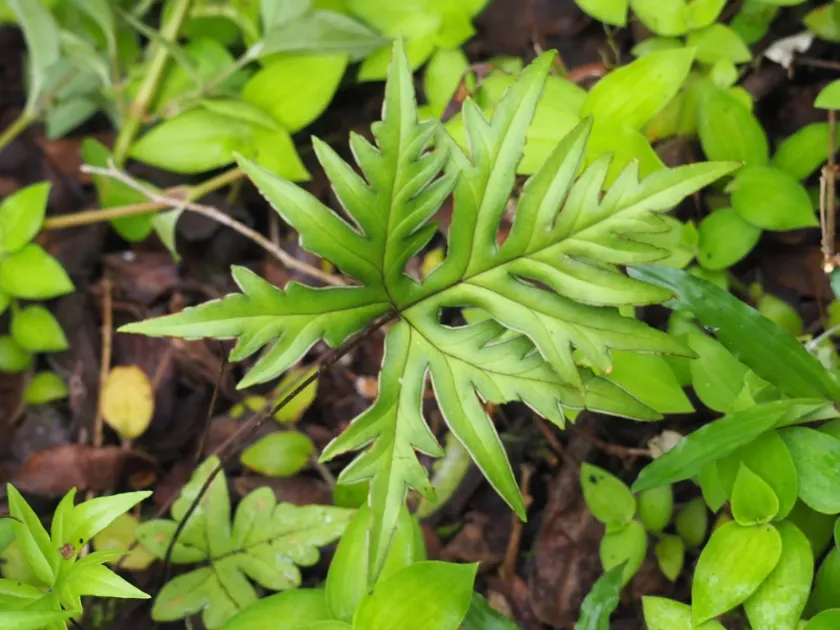
Description
Growing requirements
Doryopteris pedata belongs to the Pteridaceae family, representing a group of ferns native to the tropical regions of Central and South America. It is a perennial herbaceous plant known for its distinct, pedate (foot-like) frond shape.
Optimal growth requires a temperature range between 18°C and 24°C. The species is highly sensitive to cold drafts and sudden temperature fluctuations, which can negatively impact the overall development of the fronds.
Humidity management is critical, with 60–70% relative humidity being the standard for healthy growth. In indoor conditions, using pebble trays or professional humidifiers is recommended to maintain the necessary moisture levels.
The plant requires a well-draining, slightly acidic substrate. A mixture of peat, perlite, and leaf mold provides the necessary aeration and moisture retention capacity for its sensitive root system.
Filtered light is essential, as direct sunlight causes irreversible tissue damage to the fronds. The culture thrives in partial shade, reflecting its adaptation to the forest understory environment.
Main diseases and pests
Spider mites and scale insects are the most common pests that infest Doryopteris pedata. Infestations typically occur when air humidity levels are insufficient for a prolonged period.
Root rot, often caused by poor drainage or excessive watering, is the primary pathological threat. It leads to wilting and the eventual collapse of the plant's vascular system.
- Monitor for leaf spots indicating fungal infection.
- Avoid overhead irrigation to reduce humidity-related fungal growth.
- Isolate new plants to prevent the introduction of pests into the environment.
Effective pest management involves using mild insecticidal soaps or neem oil solutions. Chemical pesticides should be used with caution, as ferns can be sensitive to heavy concentrations.
Regular sanitation of the growing area, including the removal of dead or dying fronds, is a key agronomic practice to reduce the pressure of pests and diseases.