
Leatherleaf fern
Rumohra adiantiformis (G. Forst.) Ching
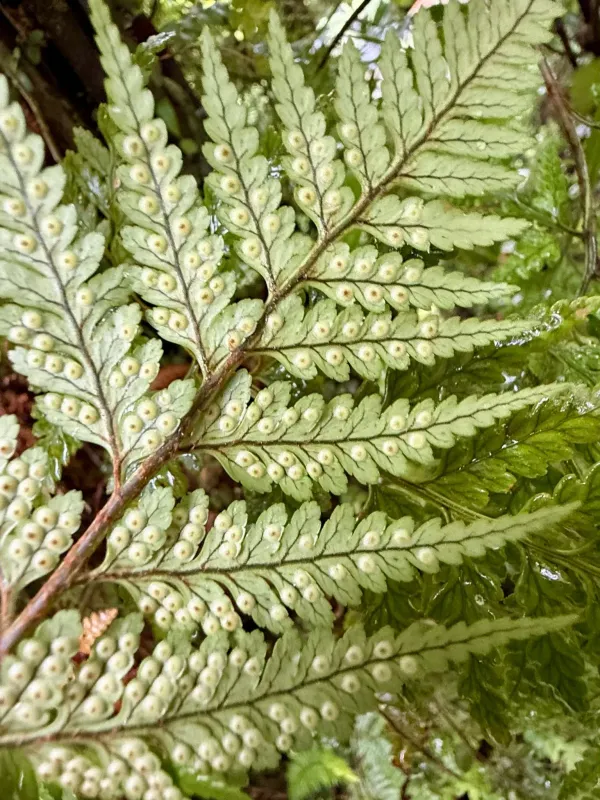
Description
Sowing dates
The propagation of Rumohra adiantiformis in commercial settings is primarily achieved through vegetative division of the rhizomes. This process is best performed during the early spring as the plant enters its active growth phase, ensuring faster establishment.
While propagation via spores is possible, it is significantly more time-consuming and labor-intensive, making it more common for breeding purposes than for large-scale production. Spore germination requires a strictly sterile substrate, constant high humidity, and steady temperatures around 20–22 degrees Celsius.
When dividing rhizomes, it is essential to ensure that each section contains at least 2–3 healthy growth points. This practice promotes robust development and maximizes the yield of new fronds in the very first growing season following replanting.
The planting of the prepared material should be done in a loose, moisture-retentive substrate enriched with peat and pine bark or needle litter. Care must be taken not to bury the rhizomes too deep, which can lead to rot and fungal infections in poorly aerated soil.
For optimal establishment, young plants should be kept in greenhouses or shaded frames with indirect light. Maintaining a stable, slightly humid environment helps protect the divisions from drying out until the new root system is fully capable of supporting the plant.
Growing requirements
As a member of the Dryopteridaceae family, the Leatherleaf fern originates from tropical and subtropical regions. It thrives in shaded or semi-shaded environments, making it ideal for greenhouse cultivation where light intensity can be precisely controlled to prevent leaf bleaching.
The soil should be slightly acidic, rich in organic matter, and possess excellent drainage. While the plant loves moisture, stagnant water is detrimental to its rhizomes, so ensuring a well-draining medium is critical for long-term survival and vigor.
High relative humidity, ideally between 70% and 80%, is essential for producing high-quality foliage. Insufficient humidity often leads to browning at the tips of the fronds, which significantly reduces the commercial grade and aesthetic appeal of the cut greens.
Temperature management is vital, with an ideal growth range between 15 and 25 degrees Celsius. While the plant can tolerate short periods of cooler weather, it is not frost-hardy and must be protected in heated structures during winter to prevent physiological damage.
Fertilization should be handled with care, using balanced, low-salt fertilizers to support foliage development. Excessive nitrogen must be avoided, as it can result in soft, tender growth that is prone to wilting and mechanical damage during harvest and transport.
Yield
The productivity of a fern plantation is measured by the number of marketable fronds harvested per plant. Under optimal agrotechnical conditions, a mature plant can consistently produce high-quality foliage throughout the growing season.
Growth intensity is heavily influenced by light levels. While the plant is shade-tolerant, moderate light levels are necessary for rapid photosynthesis, which directly correlates to the total biomass and frequency of frond production.
A well-managed plantation can remain productive for 5 to 10 years if the soil is periodically rejuvenated and organic mulching is provided. As the plant ages, the yield per plant may eventually decrease, necessitating division or replacement of the stock.
Grading is a crucial part of the harvest, with fronds categorized by length, thickness, and overall health. Standardizing the harvest based on the maturity of the frond helps ensure uniform quality for the floral supply chain.
Yield consistency relies on the selection of high-performing parent plants. By systematically culling weak or diseased specimens, producers can maintain a high average yield across the entire cultivation area, maximizing the profitability of the operation.
Main diseases and pests
The primary threats to Rumohra adiantiformis are fungal pathogens that cause root and stem rots. These are often the result of excessive soil moisture, high planting density, or poor air circulation within the greenhouse environment.
Pests such as scale insects and mealybugs can cause significant damage by feeding on the fronds. Their presence often leads to the development of sooty mold, which grows on the honeydew they secrete, rendering the foliage unsalable.
Spider mites are a common nuisance, especially during periods of low humidity. These pests feed on the underside of the fronds, causing chlorosis and premature wilting, which can quickly reduce the marketable harvest if left unchecked.
Integrated pest management, including the use of systemic insecticides and miticides, is necessary to control these issues. Growers must strictly observe pre-harvest intervals to ensure that no harmful pesticide residues remain on the cut foliage.
Good hygiene practices, such as disinfecting cutting tools between plants and promptly removing dead fronds, are essential for disease prevention. Maintaining a clean environment significantly lowers the risk of disease outbreaks and promotes overall crop health.
Harvesting
The harvest is conducted by hand, using sharp, sterilized tools to prevent the spread of pathogens. Only fully mature, dark green, and firm fronds are selected, as these possess the durability and aesthetic appeal required by professional florists.
Assessment of frond maturity is critical; harvest timing must be precise. Harvesting fronds that are too young results in poor vase life, while harvesting over-mature fronds can lead to unsightly damage to the leaf tissue during handling.
After harvesting, the foliage should be moved immediately into a cool, humid environment. Proper post-harvest handling, including cooling, helps maintain the fronds' turgidity and extends their shelf life significantly.
Transportation must be carried out at controlled temperatures, ideally between 4 and 8 degrees Celsius. Careful packaging is required to avoid bending or crushing the fronds, which would make them unsuitable for use in high-end floral arrangements.
Post-harvest processing often involves grouping and wrapping the fronds in breathable materials to protect them from mechanical injury while ensuring they do not dehydrate before reaching the final consumer or wholesale market.