
Tongue fern
Pyrrosia lingua (Thunb.) Farw.
Description
Growing requirements
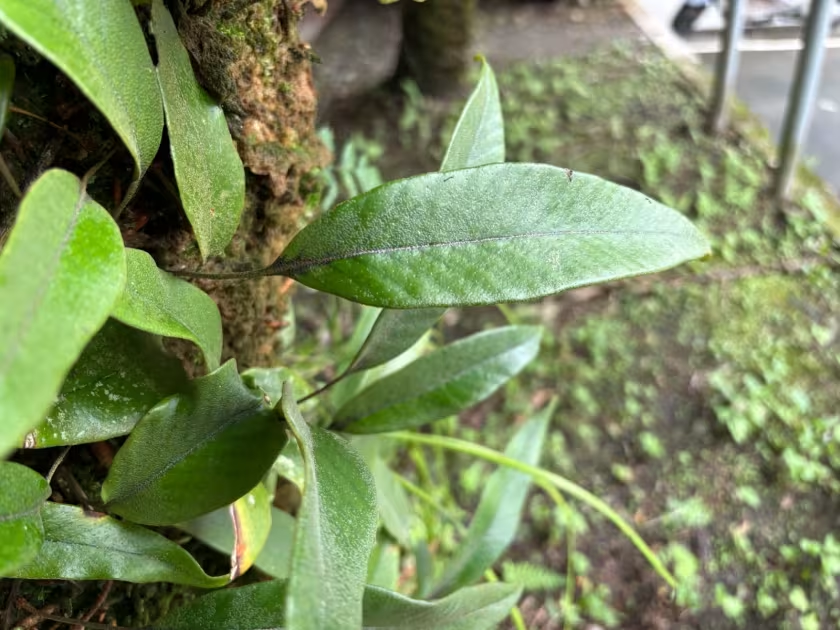
Pyrrosia lingua, commonly known as the tongue fern, is a species of fern belonging to the Polypodiaceae family. It is native to Eastern Asia, including regions in China and Japan, where it naturally thrives as an epiphyte on trees or a lithophyte on moist rock surfaces.
The plant requires a high level of ambient humidity and moderate, indirect lighting to thrive. Temperatures should ideally remain between 18°C and 24°C, as the fern is sensitive to both extreme cold and excessive heat which may cause the foliage to wilt.
For cultivation, a well-draining, loose substrate is essential. A mixture composed of pine bark, perlite, peat moss, and charcoal is highly recommended to mimic the natural conditions of a forest canopy or cliffside habitat.
Proper agricultural care involves frequent misting and ensuring that the rhizomes are kept consistently moist but not waterlogged. Overwatering is a common mistake that leads to root decay and decline of the plant's structural health.
Historically and commercially, Pyrrosia lingua has been valued for its ornamental appeal in terrariums and gardens, as well as its historical use in traditional Chinese medicine to treat various inflammatory conditions and urinary issues.
Main diseases and pests
The most common pests affecting this fern are scale insects and spider mites, which typically proliferate in indoor environments with low humidity levels.
Fungal pathogens and root rot are prevalent when the irrigation regime is poorly managed or when the substrate lacks sufficient aeration for the delicate root system.
Managing threats requires consistent monitoring of the foliage, especially the underside, where pests often seek refuge and deposit eggs.
Cultural control, such as maintaining proper air circulation and cleaning dust from the leaves, acts as the first line of defense against both biotic and abiotic plant health issues.
When chemical interventions become necessary to combat severe infestations, it is crucial to use gentle, fern-safe products to prevent tissue necrosis of the fronds.