
Vulpia fontquerana
Vulpia fontquerana
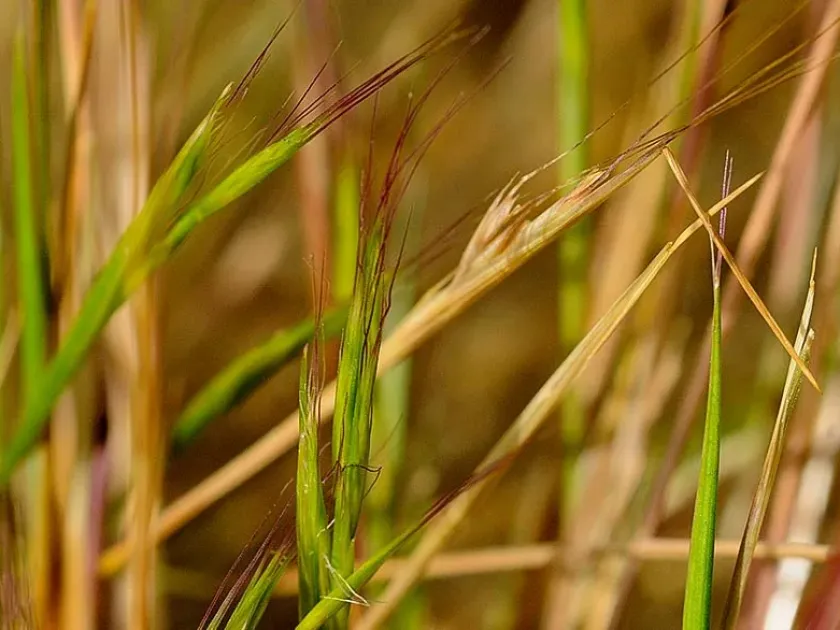
Description
Sowing dates
Vulpia fontquerana belongs to the Poaceae family. In agricultural experiments, seeding should be performed in a well-drained, sandy soil medium to simulate its natural habitat conditions.
The seeds are small, requiring shallow planting depths, ideally between 0.5 to 1.5 centimeters to ensure successful germination and seedling emergence.
Sowing is best carried out in early autumn, allowing the plants to establish their root systems during the milder temperatures of the cooler season.
Proper seedbed preparation is crucial; the soil surface should be finely crumbled to facilitate the contact of seeds with the moist soil particles.
Irrigation during the establishment phase is recommended, especially in regions with limited natural rainfall, to ensure that the fragile seedlings survive the initial development stage.
Growing requirements
This species is highly adapted to arid and semi-arid environments, favoring poor, rocky, or sandy substrates where competition from other vegetation is minimal.
Vulpia fontquerana exhibits remarkable drought tolerance, making it an interesting candidate for xeriscaping or ecological restoration in desertified zones.
Full sun exposure is a non-negotiable requirement for this grass; it does not thrive in shaded areas and will show significantly reduced growth if light is limited.
The soil pH should ideally remain neutral or slightly acidic, as the plant is not well-suited for high-salinity environments or waterlogged conditions.
Temperature tolerance is a key trait, allowing the plant to persist through hot, dry summers after completing its primary reproductive cycle in the spring.
Harvesting
Harvesting Vulpia fontquerana for seed collection requires precise timing, as the panicles are prone to shattering immediately after reaching full maturity.
Monitoring the change in color of the seed heads from green to a straw-yellow shade is the standard method for determining the appropriate harvest window.
Mechanical harvesting must be conducted with care, using settings that minimize impact on the grain to preserve the integrity of the seeds.
Post-harvest management involves immediate drying in an area with good air circulation to reduce seed moisture content to safe storage levels.
Storage should take place in a cool, dry place within airtight containers to prevent moisture accumulation and protect the seeds from pests and fungal growth.