
Vulpia ciliata
Festuca ambigua
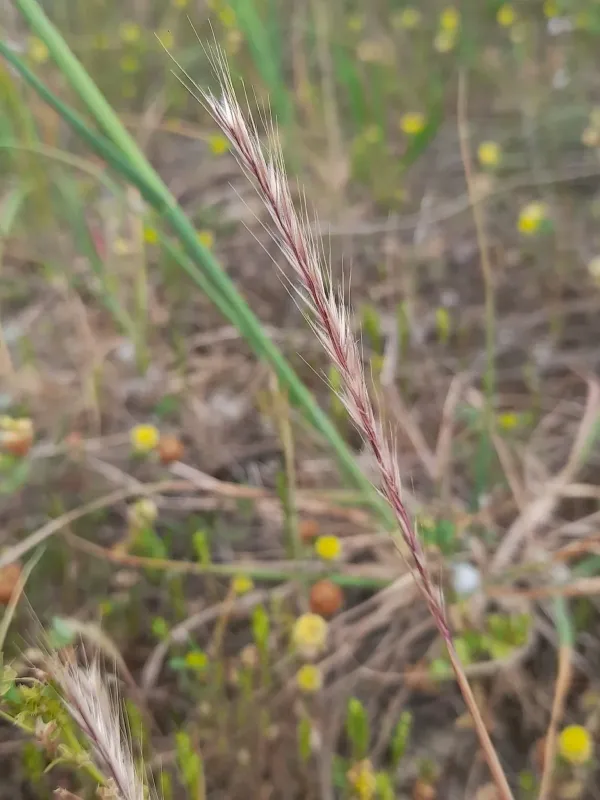
Description
Sowing dates
Sowing should be scheduled to align with the plant's natural growth cycle, typically in early spring or late autumn depending on local climate conditions. Ensuring good seed-to-soil contact is critical for success.
Given the small seed size of Vulpia ciliata, precise placement is required. Shallow sowing depths prevent the exhaustion of the plant's energetic reserves before the first true leaves are established.
Proper seeding rates are vital to avoid overcrowding, which could lead to weakened plants and increased vulnerability to disease. The rate is usually determined based on the target stand density and local seed viability tests.
Using drill seeders or broadcasting with subsequent light harrowing is recommended. This minimizes the risk of seed dispersal by wind while maintaining an ideal environment for germination.
Establishing the crop requires minimal field intervention, though keeping the seedbed free of aggressive broad-leaved weeds during the first weeks of growth is beneficial for establishing a uniform stand.
Growing requirements
Vulpia ciliata (syn. Festuca ambigua) is an annual grass belonging to the Poaceae family. It is recognized as an ephemeral species, completing its growth cycle rapidly, which is an essential adaptation to Mediterranean and temperate continental climates.
The plant is typically found in sandy, rocky, and low-nutrient soils. It thrives in open, sunny environments where competition from larger, more aggressive perennial plant species is naturally minimized by environmental constraints.
Biologically, the plant is well-adapted to habitats with significant seasonal water variation. It utilizes spring moisture to complete its vegetative growth, flowering, and seed set before the summer drought period occurs.
Soil requirements for Vulpia ciliata are relatively modest. It does not require high levels of nitrogen or complex mineral supplementation, making it useful for ecological restoration of degraded or poor-quality soil surfaces.
The agricultural importance of this grass is linked to its ability to colonize disturbed areas. It acts as an early-season soil stabilizer, preventing wind and water erosion in vulnerable habitats.
Main diseases and pests
Common threats to Vulpia ciliata include various foliar fungal pathogens that thrive under high-humidity conditions. Powdery mildew can affect growth if the stand density is too high or air circulation is poor.
Pests like aphids are frequent visitors to young shoots. While the plant is generally robust, severe infestations during the peak growing season can significantly stunt growth and lead to reduced vigor.
Environmental stress, particularly unexpected drought or extreme frost during the early growth phases, can negatively impact seed production and plant density across the field.
Root system issues can arise in compact soils. Although the plant prefers well-drained habitats, waterlogging can lead to secondary infections, as the root structure is not adapted for anaerobic conditions.
Integrated pest management remains the preferred strategy, focusing on cultural practices such as crop rotation and balanced nutrient management to prevent the build-up of specialized pests and diseases.
Harvesting
For forage purposes, harvesting must occur early, before the plants reach the flowering stage. At this stage, the nutritional profile of the grass is at its peak, providing excellent palatability for livestock.
Seed harvesting requires careful timing, as the species is prone to seed shattering. Operations should be timed as soon as the seeds reach the late milk or early dough stage to maximize yield.
The harvest machinery should be carefully adjusted to handle the fragile nature of the grass stems. High-speed threshing can damage the seeds, so gradual settings are advised to maintain seed quality.
Post-harvest management includes rapid drying or processing of the biomass. If intended for hay, the small stems dry quickly, preserving nutrients, though caution must be taken to prevent fungal growth.
Storage of the seeds requires low-humidity environments. Since the seeds are small, screen cleaning and air separation are necessary to remove inert debris often collected from sandy habitats.