
Ventenata
Ventenata dubia
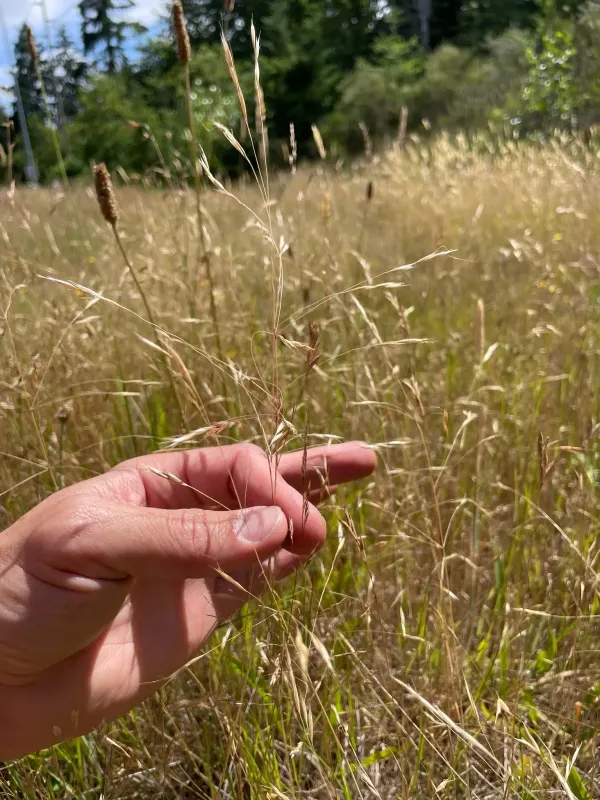
Description
Growing requirements
Ventenata dubia, commonly known as North Africa grass or Ventenata, is an annual grass species belonging to the Poaceae family. It is widely recognized as a serious invasive weed in agricultural and grazing lands.
Originally native to parts of Europe and Western Asia, the species has successfully colonized diverse landscapes, particularly in the Pacific Northwest of the United States, where it aggressively invades dryland wheat fields.
The plant thrives in a wide range of soil conditions, including low-fertility and degraded soils. It is highly adaptable to various climatic zones, showing a preference for open environments with sufficient light exposure.
Botanically, the species is characterized by its slender stems and narrow leaves, making it difficult to distinguish from desirable grasses during the seedling stage. Its rapid growth cycle allows it to reach maturity quickly.
The dispersal of this weed is primarily facilitated by wind and human activity, as its seeds are lightweight and easily carried across long distances, complicating containment efforts in large-scale farming operations.
Main diseases and pests
As a grass species, Ventenata dubia can harbor various fungal pathogens, such as rusts and smuts, which may subsequently spread to cereal crops. This acts as a reservoir for diseases within the agroecosystem.
Common agricultural pests, including cereal aphids and various stem-boring insects, frequently inhabit this weed. These pests can migrate from the weed to nearby crops, causing significant economic damage.
The presence of Ventenata in forage fields significantly reduces the nutritive quality of hay and pasture. Its rapid growth allows it to outcompete forage grasses, leading to reduced livestock carrying capacity.
Controlling this weed is challenging because it often grows within established grass crops, limiting the use of selective herbicides. Proper identification and timing of application are crucial for successful mitigation.
Integrated pest management strategies are recommended, including the use of competitive cover crops, crop rotation, and targeted herbicide applications to prevent the buildup of the soil seed bank.