
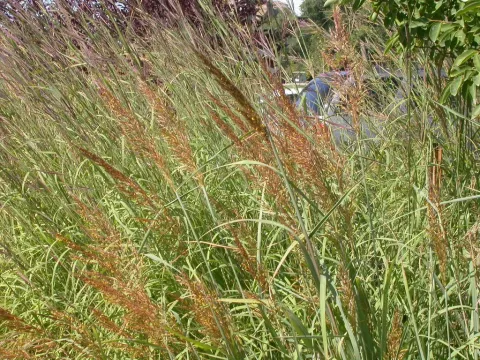
Indiangrass
Sorghastrum
Sowing Indiangrass (Sorghastrum nutans) is best conducted during the spring when soil temperatures reach 15–20°C. A fine, firm seedbed is essential due to the small size of the seeds, which are sensitive to planting depth.
What the section contains

Indiangrass
The optimal seeding depth is between 1 and 2 centimeters. Planting too deep can hinder emergence or lead to the death of the seedling as it lacks sufficient energy to reach the soil surface.
Proper soil-to-seed contact is a critical factor for success. Using a cultipacker or heavy roller after sowing helps prevent the soil from drying out and ensures moisture is distributed evenly for germination.
Seeding rates typically range from 8 to 12 kilograms per hectare depending on seed quality and the purpose of the planting. Uniform drilling is the preferred method for establishing solid stands.
As a perennial species, Indiangrass grows slowly in its first year, focusing its energy on developing a robust root system. Weed control during this establishment phase is crucial to prevent competition from more aggressive weeds.
Indiangrass is a perennial grass belonging to the Poaceae family, known for its high adaptability. Originally native to North American prairies, it is well-suited to handle diverse environmental conditions.
It thrives best in well-drained, fertile loam soils but shows remarkable tolerance to occasional flooding and moderate drought. The plant responds exceptionally well to nitrogen fertilization, particularly during the active tillering stage.
The plant is highly photophilic, meaning it requires full sunlight to achieve maximum growth. Shaded conditions significantly reduce biomass production and lower the overall nutritional quality of the forage.
An optimal soil pH for Indiangrass ranges from 5.5 to 7.5. In acidic soils, lime application is recommended to improve nutrient uptake and enhance the efficiency of fertilizer use.
With its deep and extensive root system, Indiangrass is an excellent choice for soil stabilization and land reclamation projects, effectively outcompeting many undesirable species in established pastures.
Under favorable management, the biomass yield of Indiangrass can reach 30–50 quintals per hectare in dry matter. This yield potential depends heavily on soil fertility, moisture availability, and proper fertilization management.
The second year of growth typically marks the peak of productivity as the root system matures. With appropriate cutting regimes, this high level of yield can be sustained for many years.
In agricultural settings, it is primarily used for hay production and grazing. Hay quality is high provided the harvest occurs before the stems become overly lignified and coarse.
Maximum nutrient concentration is reached during the boot stage to early flowering. Post-flowering, the plant increases in lignin content, which can reduce the digestibility of the forage for livestock.
Beyond traditional agriculture, Indiangrass is being studied as a promising feedstock for bioenergy production, owing to its high cellulose content and impressive biomass-to-energy conversion potential.
Indiangrass is generally resistant to many common pathogens, though high humidity can occasionally trigger rust infections. These fungal diseases affect leaf tissue, reducing the plant's photosynthetic capacity.
Pests such as grass-feeding flies and cutworms pose the most significant threat, particularly to young shoots during the early vegetative stages, which can lead to patchy stands.
Effective prevention involves maintaining recommended seeding densities and ensuring adequate airflow through the stand to reduce the likelihood of fungal colonization.
When pest pressure exceeds economic thresholds, systemic insecticides may be necessary, especially in seed production areas. However, biological control methods are preferred for forage-producing pastures.
A balanced crop rotation program is an essential tool for maintaining soil health and disrupting the life cycles of typical grass-family pests, ensuring the long-term viability of the stand.
For high-quality hay, harvesting should be performed when the plant is in the panicle emergence stage. This ensures the best balance between biomass weight and protein content for livestock feed.
Using a conditioner during mowing significantly speeds up the drying process. Aiming for a target moisture level of 15–18% ensures safe storage without the risk of spontaneous combustion or mold development.
When grazing Indiangrass, rotational management is key. Avoid grazing the plants shorter than 10–12 centimeters from the soil surface to protect the growing point and allow for vigorous regrowth.
Seed harvesting should occur when the panicles reach a golden brown color and the seeds are fully hardened. Precision is required to minimize shattering losses, as the seeds can be easily wind-dispersed.
Post-harvest, a light harrowing of the field helps remove debris and stimulates next season's growth, ensuring the field remains productive and healthy for subsequent years of use.