
Indiangrass
Sorghastrum nutans (L.) Nash
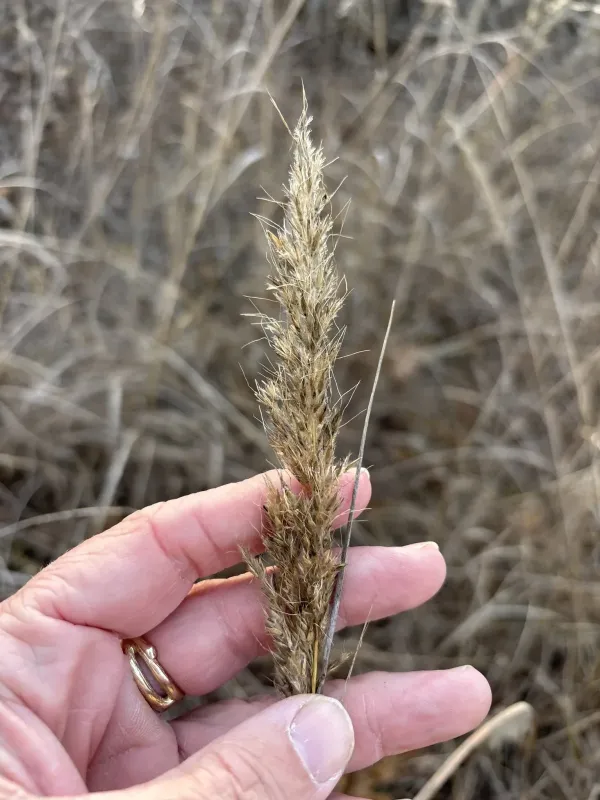
Description
Sowing dates
Indiangrass (Sorghastrum nutans) is a perennial warm-season grass that serves as a cornerstone species in prairie restoration and forage production. Planting should occur in early spring when soil temperatures reach 15–18°C to ensure robust seedling establishment.
Seed depth is critical for this species; seeds should be placed no deeper than 1.5–2 centimeters. Using a specialized native grass seed drill with press wheels is highly recommended to guarantee proper soil-to-seed contact and optimal moisture uptake.
Seeding rates typically range from 8 to 12 kilograms per hectare, depending on pure live seed (PLS) content and the intended use of the site. In the first season, the plant allocates significant energy to developing its deep, extensive root system, resulting in slow top growth.
Weed management is paramount during the establishment year. Because the plants grow slowly, they are susceptible to competition from fast-growing weeds, making mowing or the application of selective herbicides essential for protecting the stand.
Successful establishment sets the stage for a long-lived perennial stand that can persist for years with minimal maintenance, providing high-quality forage or habitat cover.
Growing requirements
Indiangrass thrives in well-drained, fertile loam soils but is remarkably adaptable to various soil types, including sandy and rocky substrates. It prefers a pH range that is neutral to slightly acidic for optimal nutrient availability.
As a warm-season grass, it requires full sun exposure and warm temperatures to maximize its growth potential. It is highly drought-tolerant, maintaining productivity even during periods of limited rainfall, which makes it an excellent choice for arid environments.
Nutrient requirements are moderate; however, soil testing is advised to determine if phosphorus or potassium deficiencies exist. Nitrogen should be applied judiciously, as excess fertilizer may lead to weak, prone-to-lodging stems.
The plant is exceptionally winter-hardy, with its dense root system protecting the crown during freezing temperatures. Waterlogging should be avoided, as stagnant moisture can lead to root rot and reduced stand longevity.
In terms of climate, Indiangrass is highly versatile, provided it has access to direct sunlight and well-aerated soil. It is effectively used in mixed-species plantings to increase biodiversity and resilience in agricultural landscapes.
Yield
When managed properly, Indiangrass can produce yields of 6–10 tonnes of dry matter per hectare. Yield potential is heavily influenced by soil fertility, growing season length, and the timely arrival of seasonal precipitation.
It is valued as a high-quality forage grass when harvested before the boot stage or early flowering. At this phase, the forage provides balanced protein and fiber, which is palatable for cattle and other ruminants.
If used for grazing, rotational grazing patterns should be implemented to prevent overgrazing. Maintaining a minimum stubble height is vital to ensure the plants recover quickly and remain vigorous for the following growing season.
Harvesting for seed production requires careful monitoring, as the seeds mature unevenly. Harvesting in the late dough stage, followed by proper drying and cleaning, is necessary to maximize seed viability and purity.
The long-term viability of the stand makes Indiangrass an economically sustainable choice for farmers looking for low-input forage solutions that provide consistent returns over several years.
Main diseases and pests
Indiangrass is naturally resistant to many common pests and diseases, which helps minimize chemical inputs in agricultural settings. However, in high-humidity environments, leaf rust may occur, which can impact forage quality.
Pests such as stem-boring insects are occasionally reported but rarely reach economic injury levels. The plant's structural toughness generally acts as a physical barrier against common agricultural pests.
The greatest threat to Indiangrass is early-stage competition from weeds. Failure to control aggressive annual grasses during the establishment year is the most common cause of stand failure.
Preventative measures, such as maintaining proper plant spacing and ensuring good air circulation, significantly reduce the incidence of fungal pathogens. Integrated Pest Management (IPM) practices focus on scouting and timely interventions only when necessary.
By prioritizing soil health and using certified, pathogen-free seed, growers can maintain healthy stands that resist disease pressures and sustain productive output for over a decade.