
Indian grass
Sorghastrum avenaceum
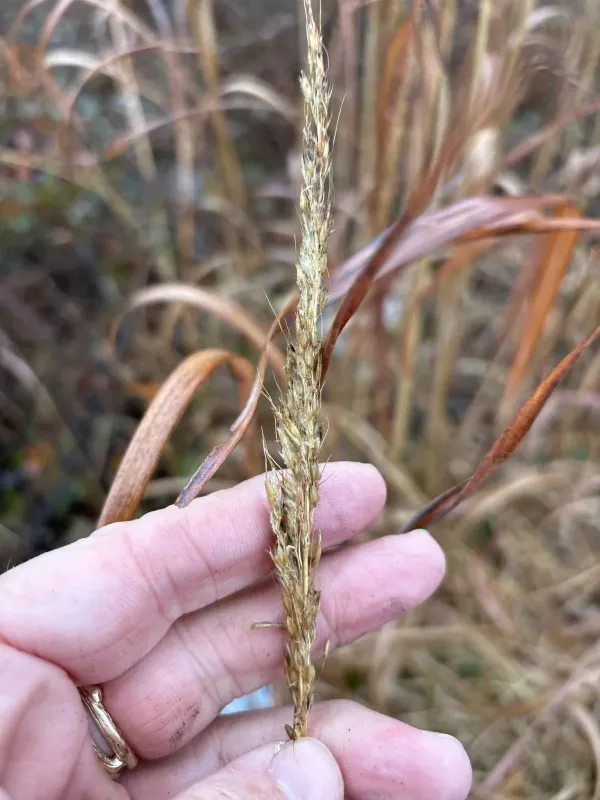
Description
Sowing dates
Indian grass (Sorghastrum avenaceum) is a prominent warm-season perennial grass belonging to the Poaceae family, native to the North American tallgrass prairies. Sowing is best performed in early to mid-spring once the soil temperatures have risen significantly to support germination.
The seeds should be planted at a shallow depth of approximately 1 to 2 centimeters to ensure adequate contact with moist soil without burying them too deeply, which can inhibit sprouting. Preparing a firm and weed-free seedbed is essential for successful establishment.
In regions with long growing seasons, dormant seeding during late autumn is also a viable practice, allowing the seeds to undergo natural winter stratification, which often results in more uniform germination the following spring.
Planting density depends on the intended use: forage production requires higher seeding rates to establish a dense, productive stand, while restoration projects often utilize lower rates to allow for species diversity.
Young seedlings grow slowly during their first year as they focus on deep root development. It is crucial to manage weed competition during this period to ensure the survival and long-term health of the crop.
Growing requirements
Indian grass is highly adaptable to a variety of environmental conditions and is particularly noted for its exceptional drought tolerance, once the extensive root system is well-established. It thrives in full sunlight and does not tolerate shady environments.
While it prefers fertile, well-drained loamy or sandy soils, the plant is quite versatile and can grow in a range of soil types, including those with varying pH levels. It performs poorly in persistently saturated or waterlogged sites.
The grass is known for its heat tolerance, maintaining vigorous growth throughout the hottest months when many cool-season grasses enter dormancy. Its winter hardiness makes it a reliable perennial option for a wide range of climatic zones.
Adequate nitrogen availability is important for maximum biomass production. However, Indian grass is efficient in nutrient uptake, making it a sustainable choice for low-input agricultural systems and ecological restoration.
Beyond agricultural uses, the deep root system of Indian grass makes it an excellent choice for soil stabilization and erosion control, particularly on slopes and in reclaimed lands where soil structure needs improvement.
Yield
The yield of Indian grass is characterized by significant biomass production during the summer peak. It is highly valued in the livestock industry as a palatable forage crop that provides essential nutrients during periods when other forage sources may be scarce.
Harvesting for hay should ideally take place before the plant enters the full flowering stage to ensure the best balance between protein content and dry matter yield. Proper timing of the harvest is critical to maintain the nutritional quality of the forage.
Indian grass recovers well from grazing, provided that rotational grazing practices are implemented to prevent overgrazing, which can deplete root reserves and reduce the longevity of the stand.
Seed production can be variable depending on weather conditions during pollination. Farmers often use specialized harvesting equipment to manage the fluffy seeds, which can be difficult to harvest compared to smaller, heavier cereal grains.
With correct management, a stand of Indian grass can remain productive for many years, offering a consistent and reliable supply of high-quality hay for ruminant animals throughout the feeding season.
Main diseases and pests
Indian grass is generally resistant to most common grass diseases. However, in conditions of poor air circulation and high humidity, foliar diseases such as rusts may occasionally occur, requiring management through thinning or improved field ventilation.
Insect pests are rarely a major concern for this crop, as its tough, fibrous texture is naturally unappealing to many common agricultural pests that target more succulent or tender cereal crops.
The most significant threat to a new Indian grass stand is competition from aggressive weeds. Integrated weed management, including mechanical mowing and appropriate herbicide application, is necessary to protect the crop during its establishment phase.
Root rot and other soil-borne issues can develop in areas with inadequate drainage. Ensuring that fields are well-drained prior to planting is the best preventative measure against such diseases.
Regular field scouting is recommended to monitor for any localized outbreaks of pests or diseases, allowing for timely intervention and maintenance of the overall health of the agricultural ecosystem.