
Rottboellia cochinchinensis
Rottboellia cochinchinensis (Lour.) Clayton
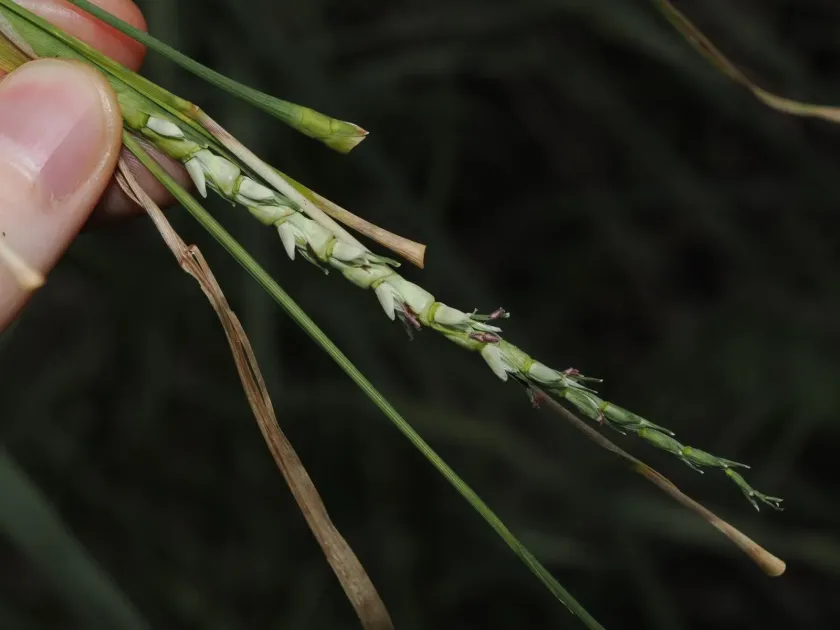
Description
Growing requirements
Rottboellia cochinchinensis, commonly known as itchgrass, is an annual grass species belonging to the Poaceae family. It is recognized globally as one of the most aggressive and persistent weeds, capable of severely impacting crop yields in tropical and subtropical regions.
Originating from Asia, this plant has spread extensively across the globe, colonizing agricultural fields, roadsides, and disturbed areas. It is highly adaptable to a wide range of soil types, showing a preference for fertile soils with high nitrogen content and sufficient moisture.
The plant grows rapidly, reaching heights of up to three meters under optimal conditions. Its stems and leaf sheaths are covered in sharp, stiff hairs, which are a characteristic feature that provides protection against herbivores and causes skin irritation to humans.
Climate requirements include high temperatures and adequate rainfall for germination and rapid vegetative growth. While it thrives in moist conditions, the plant also exhibits a remarkable ability to survive brief periods of drought, ensuring its dominance in variable climates.
Agronomic management is challenging due to the plant's high competitive capacity. It rapidly consumes available nutrients and water, often outcompeting staple crops such as maize, sugarcane, and soybeans, leading to significant economic losses for producers.
Main diseases and pests
One of the primary threats posed by itchgrass is its exceptional seed production capacity. A single plant can release thousands of seeds, which remain viable in the soil seed bank for several years, ensuring infestation recurrence.
The weed acts as an alternative host for various pests and plant diseases, including viruses that specifically target graminaceous crops. This reservoir effect complicates disease management, as the weed maintains pest populations even when no crops are present.
Common pests associated with this plant include stem borers and various nematodes that can migrate to adjacent crop fields. These interactions necessitate complex integrated pest management programs to prevent widespread infestation and yield degradation.
Mechanical control, such as manual weeding, is hazardous due to the irritant hairs on the plant. Furthermore, shallow cultivation often fails to destroy the plant effectively, as it can regenerate from the crown if not completely removed.
Chemical control remains the most frequent management strategy, yet it is complicated by the development of herbicide resistance in some populations. Integrated strategies involving rotation, competitive planting, and systematic herbicide applications are recommended for effective control.