
Rottboellia selloana
Rottboellia selloana
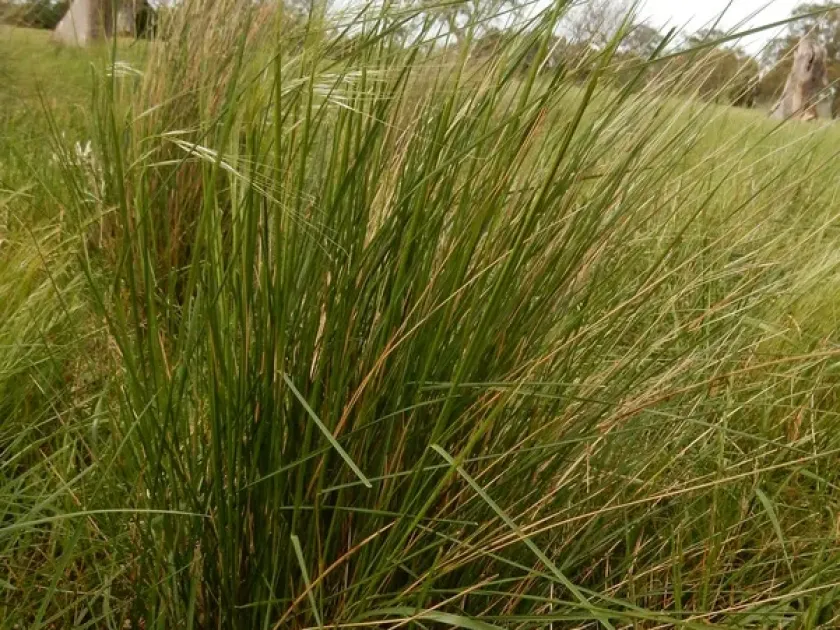
Description
Sowing dates
Rottboellia selloana is a member of the Poaceae family that thrives in warm, temperate climates. Sowing typically takes place in spring once the soil temperature is consistently above 15 degrees Celsius to ensure rapid germination.
The seeds should be sown at a shallow depth of approximately 1 to 2 centimeters. Using precise seeding equipment helps achieve the necessary row spacing, usually between 30 and 45 centimeters, which is ideal for canopy development.
Field preparation involves primary tillage followed by secondary cultivation to create a fine, weed-free seedbed. Compacted soil must be avoided as it hinders root penetration and early seedling vigor.
Post-sowing rolling is highly recommended to improve soil-to-seed contact. This practice is essential for uniform emergence, especially in drier environments where moisture retention is a priority.
Fertilization regimes often focus on nitrogen application during the tillering stage to boost biomass production. Adequate phosphorus and potassium should be provided at planting to support root development.
Growing requirements
This grass species performs best in well-drained, fertile soils with a pH ranging from 6.0 to 7.5. It is highly sensitive to waterlogging, making site selection with good drainage critical for long-term survival.
Rottboellia selloana is a sun-loving plant that requires full exposure to solar radiation. Shading reduces the photosynthetic efficiency of the plant, leading to lower yields and inferior nutrient profiles.
While the plant exhibits moderate drought tolerance, it requires consistent moisture during peak growth stages. Supplemental irrigation is a standard practice in commercial production to maximize hay or silage quality.
Temperature requirements for optimal vegetative growth fall between 20 and 28 degrees Celsius. The crop is relatively sensitive to severe frost, so regional suitability should be assessed before large-scale planting.
Good soil structure is vital, and periodic cultivation between rows helps manage aeration. Proper management of these environmental factors leads to high-quality yields and long-lived stands.
Main diseases and pests
Fungal pathogens such as rusts and leaf spot diseases represent the primary biological threats, particularly during humid seasons. Integrated pest management, including fungicide application, is often necessary to protect leaf area.
Pests such as cereal aphids and stem-boring larvae can significantly damage stands if left untreated. Regular scouting is recommended, particularly during the transition from the vegetative to the reproductive phase.
Weed competition is most problematic in the early establishment phase. Implementing a robust weed control program, potentially using selective herbicides, is essential for maintaining crop integrity.
To minimize disease pressure, maintain spatial isolation from neighboring grass fields. Rotation with broad-leaved crops can help break the lifecycle of specific soil-borne pathogens and pests.
- Rust fungal infections in humid conditions.
- Stem-borer damage in late summer.
- Root rot caused by persistent water stagnation.