
Leersia hexandra
Leersia hexandra Sw.
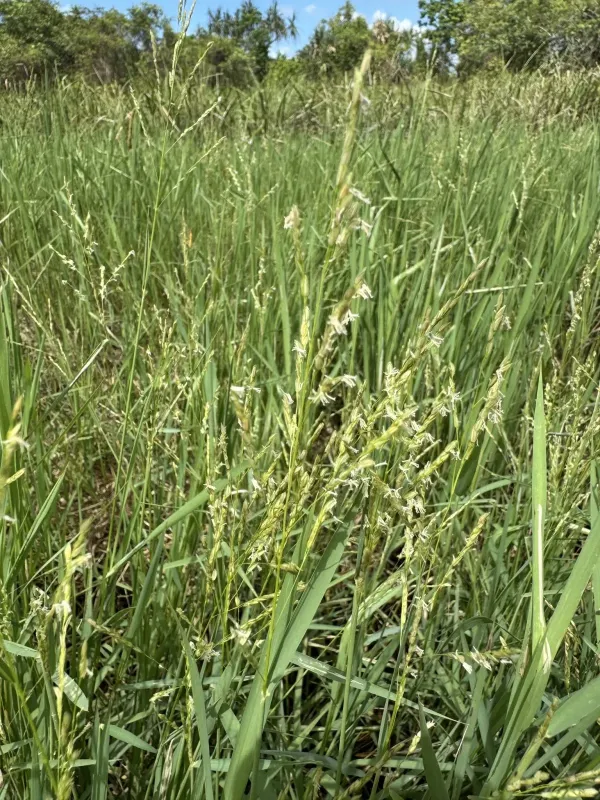
Description
Growing requirements
Leersia hexandra, commonly known as southern cutgrass, is a perennial grass belonging to the Poaceae family. It is distinctively adapted to wetlands, swamps, and flooded agricultural fields.
The plant is native to tropical and subtropical regions worldwide. Its robust rhizomatous root system allows it to thrive in saturated, acidic, and anaerobic soils where many other grass species would fail to survive.
Botanically, it features slender, branching stems that root at the nodes. The leaf blades are characterized by their serrated, sharp edges, which provide the plant with its common name and help protect it from some herbivores.
It requires high moisture levels and consistent ambient temperatures to reach its full development. Light availability is also a critical factor; while it can tolerate partial shade, it performs best in open, sun-drenched environments.
Soil requirements focus on high organic content or muddy composition. The plant is a primary colonizer in disturbed wetland ecosystems and requires minimal input to establish itself in suitable moist conditions.
Yield
The main agricultural use for Leersia hexandra is as a forage source. Livestock, particularly cattle, utilize it as a secondary grazing resource in regions where high-quality pasture is limited.
The biomass productivity is high under conditions of continuous shallow flooding. When managed correctly, the plant recovers rapidly from grazing or mechanical harvesting, allowing for multiple cuts per season.
Nutritional value is considered moderate, making it a reliable supplement for ruminants. It is essential to harvest the grass before it becomes overly mature to maintain palatability and digestibility.
Beyond livestock feed, the species is recognized for its role in phytoremediation, helping to stabilize soil and filter pollutants from water in integrated agricultural systems.
Yield management involves ensuring that the water levels remain constant during the growing phase to maximize the regrowth rate and total tonnage of the harvested green matter.
Main diseases and pests
Disease threats primarily involve fungal infections that thrive in high-humidity environments. Leaf spot and rust are the most common pathogens affecting the foliage and reducing overall forage quality.
Insect pests include stem borers and various moth larvae that feed on the succulent parts of the grass. Controlling these populations is vital in regions where this species is grown as a dedicated fodder crop.
In rice-producing areas, Leersia hexandra is often managed as a troublesome weed due to its aggressive growth habit and ability to spread via rhizomes into irrigation ditches.
Integrated pest management strategies are generally preferred, focusing on crop rotation and water level manipulation to disrupt the life cycles of common pests and pathogens.
The use of herbicides is typically reserved for instances where the plant competes with commercial rice varieties, requiring precise applications to avoid damaging the surrounding crop environment.