
Lasiacis ligulata
Lasiacis ligulata
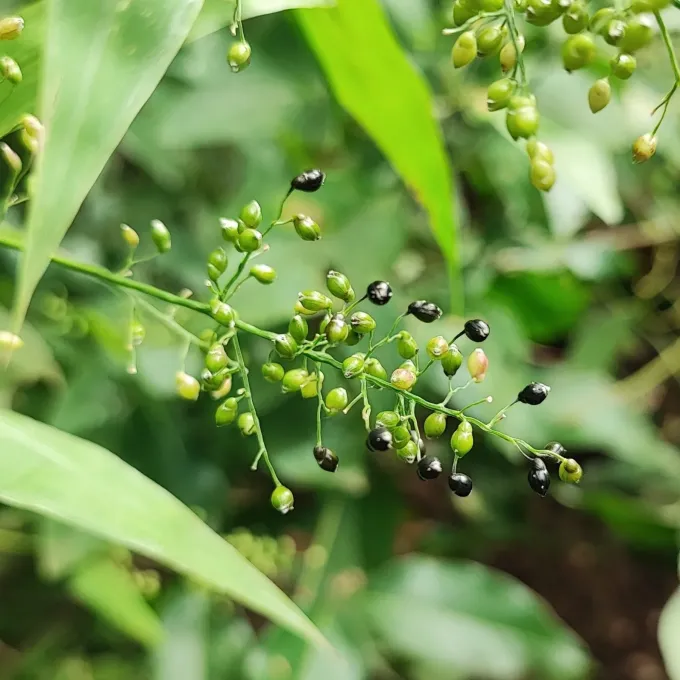
Description
Sowing dates
Lasiacis ligulata is a perennial grass species that propagates primarily through seeds and vegetative expansion, which is typical for many tropical members of the Poaceae family.
For agricultural purposes, the establishment of a healthy crop requires planting during the onset of the rainy season to ensure optimal soil moisture levels.
Temperature is a critical factor for successful germination, with the soil needing to stay consistently warm, ideally between 20 and 25 degrees Celsius.
As a tropical plant, it does not possess cold-hardiness, meaning planting schedules must be strictly aligned with frost-free climatic zones.
Spacing during planting should be carefully managed to allow for the robust tiller development characteristic of this species once it becomes established.
Growing requirements
The plant belongs to the Poaceae family and is native to tropical regions of the Americas, thriving in both forest edge habitats and cleared tropical environments.
Climate requirements include high ambient humidity and consistent rainfall, as the species is sensitive to prolonged dry spells that can stunt its growth.
It prefers well-drained soil profiles; however, it has a moderate tolerance for various soil textures provided there is no long-term waterlogging of the root zone.
Lasiacis ligulata exhibits good shade tolerance, which is a useful trait when cultivating it in silvopastoral systems or under partial forest canopy.
Standard agronomic management requires regular soil nutrient monitoring and the application of balanced fertilizers to support the plant's high biomass production.
Yield
The primary economic use of Lasiacis ligulata is as a forage source for livestock, providing grazing opportunities and a source of green fodder in tropical climates.
Biomass yield potential is high, provided the crop is managed with appropriate harvest cycles that stimulate continuous regrowth of the vegetative parts.
Nutritional value for ruminants is considered sufficient, with the plant offering a mix of structural carbohydrates and proteins essential for animal maintenance.
When managed as a pasture, rotation cycles help prevent overgrazing, ensuring the long-term sustainability of the grass stand.
Farmers can expect stable production levels if environmental conditions remain favorable and harvesting is performed in synchronization with the plant's growth stages.
Main diseases and pests
Like many tropical grasses, Lasiacis ligulata is susceptible to various fungal pathogens, such as leaf rusts, which can proliferate rapidly in humid environments.
Insect pests including specific lepidopteran larvae and grasshoppers can cause mechanical damage to leaves, potentially impacting the plant's photosynthetic efficiency.
Effective management against threats includes maintaining good air circulation within the stand and avoiding excessive moisture retention in the lower foliage.
Monitoring for pest populations is essential in the early stages of growth to prevent significant losses to the crop's vegetative structure.
Integrated pest management strategies are recommended to reduce reliance on chemical inputs while maintaining the health of the forage stand.
Harvesting
Harvesting for hay or silage should be timed to occur before the reproductive phase, ensuring the highest possible quality of the forage.
The cutting height is a vital agronomic parameter, as leaving sufficient stubble is necessary for the plant's ability to regenerate its biomass quickly.
Mechanized harvesting requires well-maintained equipment to handle the stems, which can become increasingly fibrous as the plant approaches maturity.
Post-harvest handling must focus on rapid processing to retain nutrient levels and prevent fermentation issues in stockpiled material.
Proper storage conditions, including dry and well-ventilated areas, are necessary to preserve the quality of the harvested biomass for winter or dry season use.