
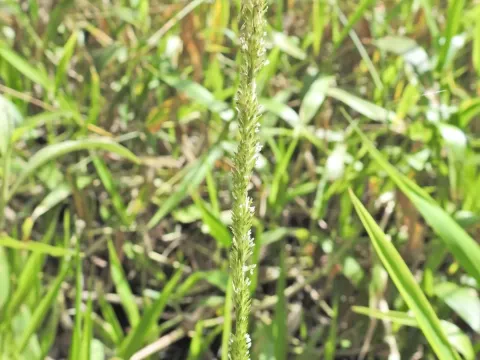
Hymenachne
Hymenachne P. Beauv.
Planting Hymenachne is primarily carried out in tropical and subtropical regions where there is no risk of soil freezing. The optimal time for sowing or transplanting stem cuttings is just before the onset of the rainy season, which ensures the high humidity levels necessary for rapid root establishment.
What the section contains

Hymenachne
Propagation for agricultural purposes is most often done vegetatively. Using stem cuttings allows for more uniform emergence compared to seed propagation, which can be inconsistent due to the low germination rates of seeds under certain field conditions.
Planting density is calculated based on the intended use of the land. For pasture establishment, higher density planting is practiced, while for seed production or maximum biomass harvesting, wider row spacing is used to facilitate better node development and tillering.
Site preparation involves clearing woody vegetation and establishing drainage channels if it is necessary to regulate flood levels. Hymenachne adapts perfectly to waterlogged areas, making it a promising candidate for use on low-lying lands that are unsuitable for other crops.
An important aspect is the control of initial weed growth. During the first few weeks after planting, the crop requires protection as it establishes its biomass slowly; however, once the canopy closes, Hymenachne successfully outcompetes most invasive weeds.
Hymenachne belongs to the Poaceae family and is a typical hydrophyte. It is ideally suited for areas with prolonged flooding, including pond edges, river floodplains, and marshy territories where most common forage grasses would perish from root rot.
The plant exhibits high ecological plasticity; however, the best development is recorded in fertile, silty soils rich in organic matter. It is capable of tolerating temporary oxygen deficiency in the soil solution, a trait attributed to the presence of aerenchyma in its stems.
Temperature regime is a critical factor for the growth of this crop. Hymenachne is a thermophilic plant that completely halts vegetation when air temperatures drop below +15 degrees Celsius, which is why its commercial cultivation is restricted to tropical and sub-tropical belts.
Light intensity also plays a key role in the accumulation of nutrients. Although the plant can tolerate light shading, maximum productivity is achieved in well-lit, open areas where photosynthesis proceeds at its most intense rate.
Agronomic management requires the application of fertilizers, especially nitrogen, in the early growth stages to form a robust leaf rosette. Subsequently, the plant efficiently utilizes nitrogen fixed in rainfall and arriving with floodwaters, which reduces the cost of additional fertilization.
The yield of Hymenachne green mass depends on the frequency of mowing and the overall level of soil fertility. Under favorable conditions with regular moisture availability, the plant is capable of providing several harvest cycles within a single calendar year.
Studies indicate that with proper pasture management, yield can reach high levels comparable to the best varieties of Para grass. It is essential to maintain a balance between intensive utilization and periods of stand recovery to ensure long-term productivity.
Forage quality remains consistently high if mowed before the active flowering phase. During this period, protein content and fiber digestibility are optimal for livestock nutrition, which positively impacts milk yields and weight gain in cattle.
Crop productivity drops significantly during prolonged droughts. Despite its ability to survive in critical conditions, Hymenachne loses turgor and sharply reduces the rate of organic matter synthesis when there is a deficiency of available moisture in the root zone.
For higher yields, rotational grazing is recommended. Rotating grazing areas allows the plant to accumulate root reserves, making the stand more durable and resistant to animal trampling and grazing pressure in the long term.
The main pests of Hymenachne are various insect species that feed on succulent leaves and stems. In cultivation regions, significant damage can be caused by armyworm caterpillars, which are capable of destroying a large portion of green mass in a short period.
Fungal diseases, such as leaf rust, develop primarily under conditions of excessively high humidity and poor air circulation within a dense stand. Affected areas may lose nutritional value and become unsuitable for feeding to livestock.
Nematodes pose a hidden threat to the root system. When infected by nematodes, the plant lags in growth, yellows, and root hairs die off, which prevents the proper uptake of mineral elements from the soil.
To minimize risks, it is necessary to maintain spatial isolation of plots and use high-quality planting material that shows no visible signs of pest infestation. Preventive mowing helps reduce the population density of insects.
Another important measure is maintaining optimal stand density. Overly dense thickets create a microclimate favorable for the development of pathogenic microflora, so timely regulation of grass height is a key agronomic technique.
Harvesting Hymenachne is primarily carried out mechanically or through livestock grazing. When preparing hay, it is important to ensure rapid drying, which is difficult in high humidity conditions, so priority is given to use as fresh-cut forage or silage.
Cutting height during harvesting plays an important role in subsequent regrowth. It is recommended to leave stubble 10-15 centimeters high, as the main growth points responsible for vegetative renewal of the crop are concentrated in the lower nodes of the stem.
The optimal phase for harvesting is the pre-flowering stage. At this moment, the biochemical composition of the plant is most balanced, and the stems have not yet become coarse, which facilitates digestion by animals and reduces losses during chopping.
When used for silage, Hymenachne compacts well in trenches. The high sugar content promotes quality lactic acid fermentation, allowing for the production of durable conserved feed for the winter period.
Seed harvesting of Hymenachne is a technically difficult task due to uneven ripening and a tendency to shatter. Usually, seed production plots are separated and harvested manually or using specialized combines with minimal threshing drum speeds.