
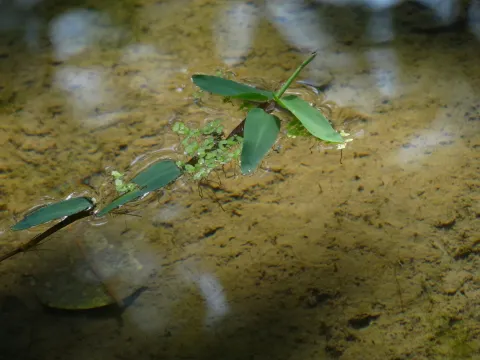
Hygroryza
Hygroryza
Hygroryza aristata, commonly known as Asian water grass, is a fascinating member of the Poaceae family. This aquatic grass is a perennial hydrophyte that thrives in stagnant or slow-moving freshwater environments throughout tropical regions of Asia.
What the section contains

Hygroryza
Botanically, it is distinguished by its unique floating nature. The stems contain specialized spongy tissues known as aerenchyma, which act as flotation devices. Additionally, the nodes produce submerged feathery roots that efficiently absorb minerals from the water column.
The plant is native to countries like India, Bangladesh, Sri Lanka, and China. It requires warm tropical climates with high solar radiation to complete its life cycle effectively. It cannot withstand cold temperatures and is strictly confined to frost-free areas.
Regarding soil and water requirements, Hygroryza prefers shallow, nutrient-rich water bodies with a muddy substrate. While it floats, the roots often gain extra stability by anchoring into the bottom mud during the peak of the growing season.
In terms of agricultural management, the plant is typically managed rather than actively planted. It often populates irrigation canals and paddy fields, where it acts as a bio-filter, helping to maintain water clarity and balance the nutrient load in aquatic systems.
The economic utility of Hygroryza is primarily focused on its use as a fodder crop. In rural areas, it is frequently harvested to feed livestock, particularly cattle and buffalo, as it provides a readily available source of green biomass near water bodies.
In some parts of its native range, the seeds of Hygroryza aristata are collected and consumed as a supplement during times of food scarcity. The plant is considered a wild crop that offers nutritional value despite its small grain size.
Yields are highly dependent on water chemistry and the presence of nitrogen or phosphorus. In eutrophic waters, the plant grows aggressively, allowing for repeated harvests of its vegetative parts throughout the long growing season.
While industrial-scale production is limited by the difficulty of harvesting on water, its ecological yield—the improvement of water quality and the suppression of harmful algae—remains a valuable service in local agricultural systems.
Practitioners of permaculture often highlight the plant's potential for sustainable aquaculture integration, where it provides cover for fish and shrimp while simultaneously producing edible or fodder-grade green matter.
The primary threats to Hygroryza populations are water pollution and the overuse of agricultural chemicals. High concentrations of pesticides from adjacent rice paddies can lead to physiological stress and reduced growth rates.
In terms of pests, the plant is vulnerable to various aquatic larvae and gastropods that graze on its foliage. Although these pests usually do not threaten the existence of the species, they can significantly reduce the quality of the harvestable biomass.
Fungal pathogens can occasionally become an issue if the water flow is restricted for too long, leading to rot at the waterline. Proper water circulation and periodic cleaning of the floating mass are essential to prevent the spread of disease.
Conversely, the plant's aggressive nature makes it a pest in irrigation canals. When left unchecked, it can form dense mats that impede water flow, requiring manual removal to maintain the integrity of the hydraulic infrastructure.
Controlling the spread involves physical removal and water level manipulation. By maintaining a healthy balance in the water ecosystem, farmers can benefit from the plant's presence while preventing the negative impacts of overgrowth.