
Cinna arundinacea
Cinna arundinacea
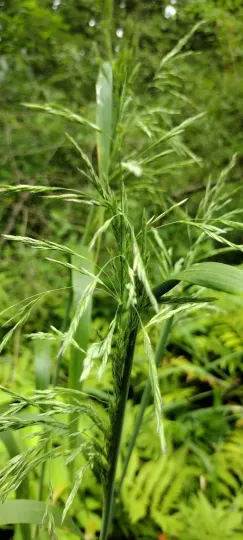
Description
Growing requirements
Cinna arundinacea, commonly known as sweet woodreed, is a robust perennial grass belonging to the Poaceae family. Native to North America, this species naturally thrives in damp forest settings, riparian zones, and marshy wetlands, showing a strong affinity for moist environments.
The plant features a sturdy, upright stem structure that can reach heights of up to 1.5 meters. Its well-developed root system is particularly adept at anchoring the plant in unstable, saturated soils, making it a vital component in local ecosystem stabilization.
For agricultural cultivation, this grass requires fertile, consistently moist soil types, such as rich loams or peat-based substrates. It is exceptionally tolerant of periodic flooding, rendering it an ideal candidate for restoring or vegetating areas prone to waterlogging.
The plant performs best in neutral to slightly acidic soil conditions. It exhibits moderate shade tolerance, allowing it to grow effectively in partially shaded environments or at the edges of woodland zones where light penetration is restricted.
Climate requirements for successful growth include consistent precipitation throughout the growing season. The plant is hardy and capable of surviving significant winter temperatures, as its root system remains protected and viable during dormant periods.
Yield
The primary agricultural utility of sweet woodreed lies in biomass production and soil erosion control. Due to its dense foliage, it serves as a viable component in forage mixes for wetlands or reclaimed moist pastures.
While not currently a widespread commercial commodity, it holds potential as a source of organic fiber. High shoot production allows for a reliable yield of green matter when moisture levels are maintained adequately throughout the growing cycle.
In ecological terms, sweet woodreed plays a significant role in maintaining biodiversity. It provides necessary shelter for small fauna, while its seeds offer a nutritious food source for various bird species and wildlife, supporting local habitat health.
Integrating this crop into existing land management plans requires an assessment of local soil nutrients. When placed in suitable conditions, the grass forms a thick canopy that naturally suppresses many invasive weed species, reducing labor costs.
Economic efficiency is achieved through the plant's perennial nature; a well-established stand can remain productive for several years without the need for frequent replanting or soil tilling, providing a low-maintenance long-term solution.
Main diseases and pests
The most significant threats to sweet woodreed stands involve fungal pathogens that thrive in high-humidity and low-airflow conditions. Powdery mildew and various rust fungi are among the primary diseases that can impact leaf health and overall vigor.
Insect pests, including cereal flies and meadow moths, may become problematic during peak population cycles. Regular field monitoring is essential to manage pest infestations and protect the quality of the green biomass harvest.
Competition from aggressive weeds during the seedling establishment phase can pose a risk to crop success. Implementing mechanical weed control or utilizing targeted agricultural practices is recommended until the grass has sufficiently established.
Inadequate soil aeration coupled with water stagnation can lead to root rot. Selecting planting sites with natural drainage or ensuring proper water management is the most effective preventative measure against such diseases.
To minimize the spread of pathogens, it is advisable to maintain spatial separation between different grass species. This agricultural strategy helps reduce the risk of cross-infection and preserves the health of the sweet woodreed population.