
Lesser quaking grass
Briza minor L.
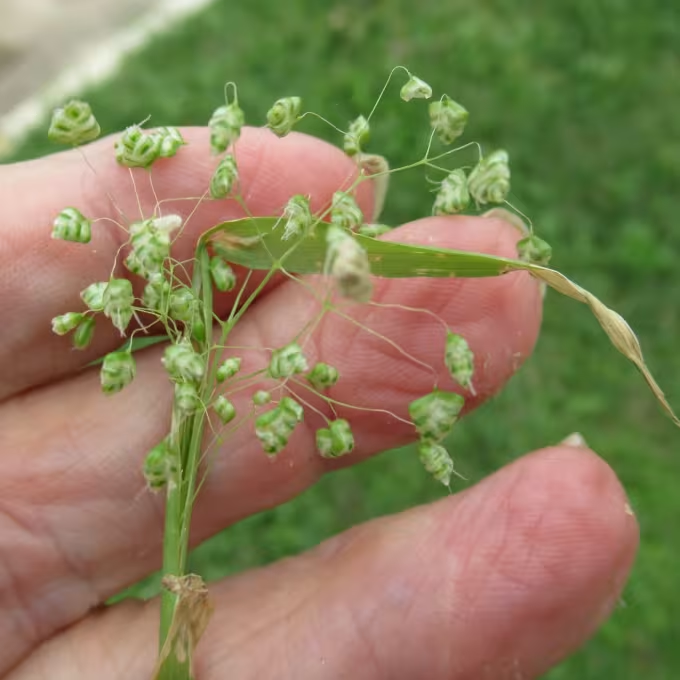
Description
Sowing dates
Lesser quaking grass (Briza minor) is an annual herbaceous plant belonging to the grass family (Poaceae). In cultivation, seeds are sown directly into open ground in the spring, once the soil has sufficiently warmed up, usually in April or early May.
For earlier flowering, it is possible to grow seedlings in greenhouses or cold frames. Seeds should be sown at a shallow depth, as they are very small and require good contact with moist substrate to germinate effectively.
The plant tolerates direct sowing well, as it possesses a relatively fragile root system that is sensitive to transplantation. The optimal planting pattern involves slight crowding to create the characteristic decorative "cloud" effect of the panicles.
Seedlings emerge uniformly when the soil temperature is stable between 15 and 18 degrees Celsius. It is recommended to maintain moderate soil moisture until fully developed leaves appear to ensure vigorous initial growth.
Agronomic practices include timely thinning of the crops if density is too high, which allows each plant to develop its distinct, airy, and delicate habit.
Growing requirements
This crop prefers sunny, well-lit locations where its ornamental qualities are fully expressed. In partial shade, the plant tends to stretch, and the panicles lose their density and color intensity.
Lesser quaking grass is not overly demanding regarding soil conditions; however, it thrives best in light, well-drained sandy or loamy soils. It does not tolerate waterlogging, which can easily lead to root neck rot.
The plant possesses moderate drought tolerance; however, for the formation of a prolific seed yield and lush decorative foliage during the active growing season, regular watering is necessary, especially during hot summer months.
The soil pH should be close to neutral, which promotes optimal nutrient uptake. On highly acidic soils, liming is recommended prior to sowing the crop.
In industrial or ornamental production settings, the crop does not require intensive fertilization. Excessive nitrogen application may lead to lodging of the stems and reduced quality of the dried flower product.
Harvesting
Harvesting the panicles for use as dried flowers is carried out during the stage of full maturity, when they acquire their characteristic golden or straw-like hue. It is essential not to miss this window, otherwise, the spikelets may start to shatter.
Cut stems are tied into small bunches and hung upside down in a well-ventilated area protected from direct sunlight. This practice preserves the natural color and shape of the panicles.
Seed harvesting is conducted upon reaching wax maturity, when the grains easily separate from the glumes. It is important to organize drying under natural conditions to prevent spoilage during storage.
After drying, the seeds are cleaned of mechanical impurities and light plant debris through winnowing. Storage is maintained in paper bags in a dry area with controlled humidity.
Properly harvested lesser quaking grass maintains its ornamental value in floral arrangements throughout the entire winter season without losing its commercial appeal.