
Greater quaking grass
Briza maxima L.
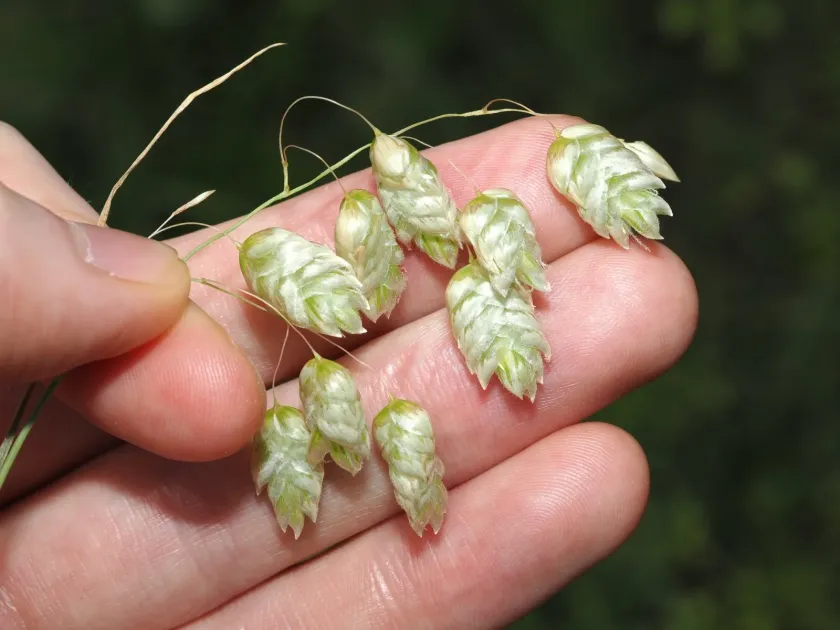
Description
Sowing dates
Briza maxima is an annual grass species belonging to the Poaceae family. Sowing is typically carried out in spring, between April and May, once the soil has warmed up sufficiently. The seeds are broadcast or sown in rows at a shallow depth of approximately 0.5–1 cm.
For earlier flower development, seeds can be started indoors in trays during March. Germination generally occurs within two to three weeks under consistent temperatures between 18°C and 20°C. Seeds require good contact with the soil and consistent moisture during the initial phase.
When sowing in the field, space plants about 15–20 cm apart to ensure adequate airflow. Proper spacing is crucial for maintaining plant health and preventing moisture build-up within the foliage, which can lead to fungal issues.
The plant grows relatively rapidly once established, forming a tidy base of leaf blades before producing its signature panicles. Because the species can self-seed effectively, sowing once is often sufficient to maintain a population in the garden for several seasons.
It is important to keep the sowing site clear of aggressive weeds during the first few weeks, as young Briza seedlings are initially slow to develop and can be easily crowded out by more vigorous species.
Growing requirements
This grass thrives in full sun, which is essential for developing strong, upright stems and the characteristic golden color of the panicles. In shaded conditions, the plants become leggy and lack their full ornamental potential.
Briza maxima prefers light, well-drained soils, including sandy or loamy types. It is intolerant of waterlogged soil, which can quickly lead to root rot. If the garden soil is heavy or clay-based, it is recommended to incorporate grit or sharp sand to improve drainage.
The species is moderately drought-tolerant once established, but providing regular water during extreme summer dry spells will yield larger, more attractive flower heads. Avoid heavy nitrogen fertilization, as this encourages excessive leaf growth at the expense of floral production.
The optimal pH range for this crop is between 6.0 and 7.5. It performs best in Mediterranean-type climates, characterized by warm, dry summers, but it can be grown in cooler regions if provided with a warm, protected sunny spot.
Because the plants are light and graceful, they are susceptible to being flattened by very strong winds or heavy rain. Choosing a site that is somewhat sheltered yet open to sunlight is the best approach for professional landscaping.
Main diseases and pests
The most common issues for Briza maxima are fungal diseases, particularly powdery mildew, which can occur in conditions of high humidity and poor air circulation. Ensuring proper plant spacing is the primary preventative measure.
Rust diseases may occasionally appear on the leaves during wet summers. If an infection is detected, it is advisable to remove the affected foliage immediately and ensure the area around the base of the plants is free of debris.
Aphids can sometimes infest the succulent parts of the plant during hot, dry spells. Monitoring the plants during early growth stages is recommended; if necessary, use mild insecticidal soaps to manage localized populations without harming beneficial insects.
Root-related issues, such as damping-off, are primarily caused by over-watering during the seedling stage. Maintaining a careful irrigation schedule ensures that the root zone remains healthy and oxygenated.
Overall, Greater quaking grass is a relatively robust plant with few serious pests, making it an excellent choice for low-input gardening and sustainable landscape design projects.
Harvesting
Harvesting for dried floral arrangements should occur when the panicles have reached full maturity. At this stage, the characteristic heart-shaped spikelets are firm and have transitioned from green to a straw-like or light bronze color.
To preserve the shape and color, cut the stems and hang them in small bunches upside down in a dark, airy location. Drying out of direct sunlight prevents the pigments from fading and keeps the spikelets from losing their form.
Properly dried Briza maxima is a staple in the floral industry, valued for its airy structure and ability to vibrate or "quake" with even slight movement. It maintains its integrity for several months if kept in a dry environment.
If producing seed for commercial purposes, harvest the spikes once they are completely dry on the plant. Gently thrash or shake the spikelets over a collection tray to separate the seeds from the chaff after the plant material is brittle.
In landscaping, if decorative dry aesthetics are preferred, the seed heads can be left on the plant to provide winter interest, swaying in the wind until the stems finally collapse in late winter.