
Pitted bluestem
Bothriochloa pertusa (L.) A. Camus
Description
Growing requirements
Pitted bluestem (Bothriochloa pertusa) is a robust perennial grass species belonging to the Poaceae family. Originating from tropical and subtropical regions of Asia and Africa, it has been widely naturalized in Australia and other arid areas due to its environmental adaptability.
The crop thrives in a variety of soil types, showing remarkable tolerance to low fertility and slightly saline conditions. Its ability to withstand prolonged drought periods is supported by a deep and efficient root system, which is critical for survival in heat-stressed environments.
Regarding climatic requirements, Pitted bluestem performs best under high solar radiation and warm temperatures. It is highly valued for its creeping growth habit, allowing the grass to spread horizontally and cover bare ground, which effectively prevents soil erosion.
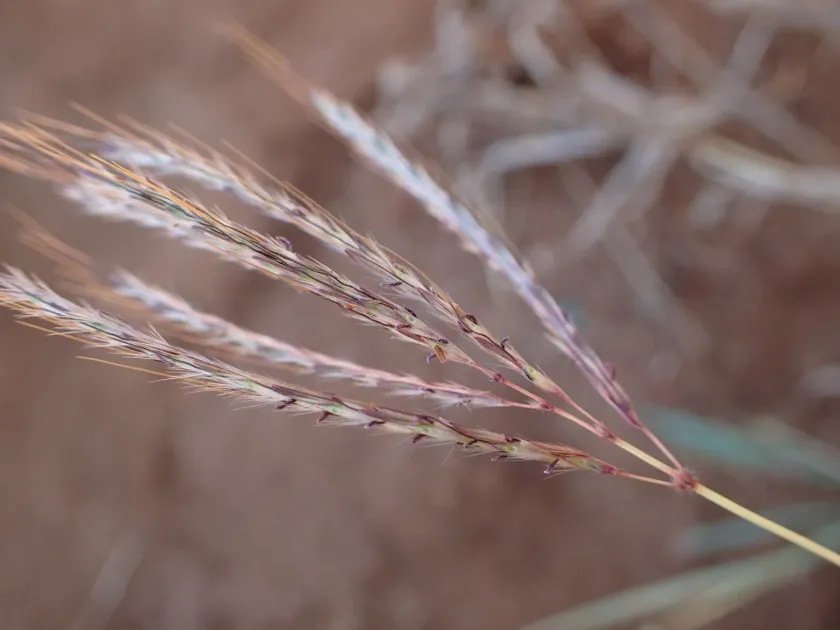
Botanically, the species is easily distinguished by the presence of a distinct pitted depression on the lower glume of the spikelet. It can grow both as upright tufts and as trailing stems that root at the nodes, facilitating rapid vegetative propagation across the pasture.
The primary agricultural use of Pitted bluestem is as a high-quality forage grass for grazing livestock. It remains palatable and nutritious throughout the active growing season, providing a stable source of feed where other less hardy grasses might fail.
Main diseases and pests
The crop is generally hardy, but it can be susceptible to fungal diseases such as leaf rust when exposed to high humidity and poor ventilation. Proper pasture management and avoiding water stagnation are essential preventative measures.
Insect pests including aphids and grasshoppers are known to cause localized damage. In high-density grazing areas, these populations must be monitored to ensure they do not exceed economic injury thresholds for the forage yield.
Soil-borne pathogens may occasionally cause root decay if the soil is excessively compacted or poorly drained. Improving soil aeration through correct management practices helps to maintain plant vigor against such threats.
Overgrazing poses the most significant threat to the longevity of the stand. When plants are repeatedly grazed before sufficient recovery, the root reserves deplete, leading to a thinner sward and increased invasion by undesirable weed species.
Integrated pest management strategies are recommended to keep the pasture healthy. This includes rotational grazing schedules, which give the grass time to recover its photosynthetic surface area and build up resilience against environmental and biotic stressors.