
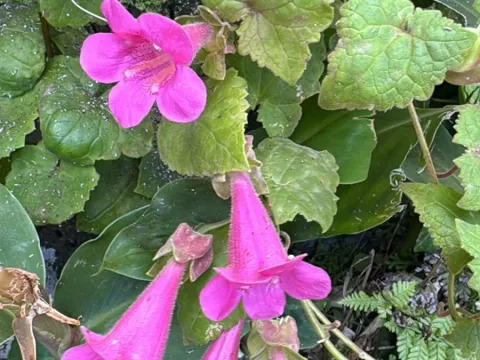
Lophospermum
Lophospermum
Sowing Lophospermum seeds should be carried out in late February or early March to ensure the plant reaches maturity by the time it is transplanted outdoors. Since the seeds are extremely small, they should be surface-sown on moistened soil rather than being covered with a layer of substrate.
What the section contains

Lophospermum
Successful germination requires a stable temperature between 20 and 22 degrees Celsius and high humidity, which is best achieved by covering the tray with glass or transparent film. The first seedlings typically emerge within two to three weeks, after which the cover should be gradually removed to acclimate the young plants.
Pricking out the seedlings should be done after the first pair of true leaves appears. Young plants are transferred to individual 10-12 centimeter pots. Care must be taken during this process as the root system is sensitive to physical damage.
Transplanting into the open garden or hanging baskets is safe only after the danger of frost has passed, usually in late May. It is essential to harden off the plants outdoors for 7-10 days before the final planting.
For optimal vertical gardening, it is recommended to place 3-4 plants in a basket with a volume of at least 5 liters. This ensures sufficient space for the rapid growth and development of the vine's lush vegetation.
Lophospermum is a perennial herbaceous vine belonging to the Plantaginaceae family, originating from the mountainous regions of Mexico. The plant features long stems that can reach 2 to 3 meters in length and produces attractive tubular flowers.
This crop has high light requirements; for prolific flowering and dense foliage, it must be placed in a sunny location protected from strong winds, which can easily damage the fragile, trailing stems.
The soil mixture must be nutritious, loose, and have a slightly acidic or neutral pH. Good drainage is a mandatory requirement, as water stagnation in the root zone quickly leads to root rot and plant death.
The watering schedule should be regular and moderate, keeping the soil consistently moist but never waterlogged. During the active growth phase, the plant should be fertilized with a balanced mineral fertilizer every 10 to 14 days.
The optimal temperature for growth ranges from 18 to 25 degrees Celsius. In cooler climates, this plant is strictly treated as an annual, as it cannot survive in the ground during even minor winter frosts.
The primary pests affecting Lophospermum in both indoor and outdoor environments are aphids and spider mites. Upon detecting any signs of these insects, it is necessary to treat the plants with systemic insecticides or acaricides immediately.
Excessive moisture in the substrate is a common cause of root rot, which spreads rapidly and can lead to the total loss of the plant. Prevention focuses on careful watering management and maintaining high sanitary standards in the growing area.
In densely planted containers with poor ventilation, there is an increased risk of powdery mildew. To protect the crop, it is recommended to avoid overhead watering and ensure adequate air circulation around the stems and leaves.
Using non-sterile soil can trigger fungal diseases at the seedling stage, such as damping-off (black leg). Sterilizing the soil mix prior to sowing is a recommended best practice for healthy propagation.
Regular inspection of the foliage is essential to identify early symptoms of disease or pest infestation. Early intervention is the most effective way to prevent the spread of infections across the entire planting area.