
Lophospermum
Lophospermum hybrids
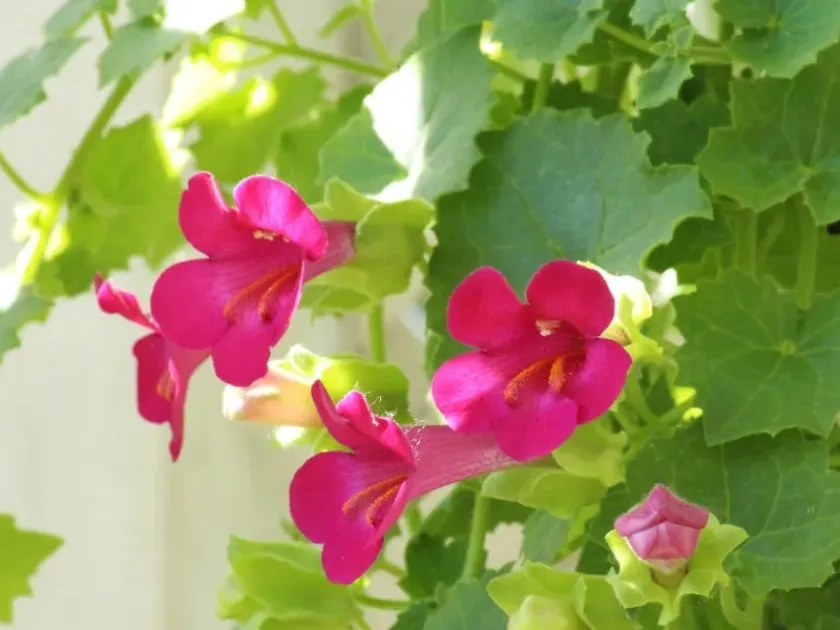
Description
Sowing dates
Lophospermum, a genus within the Plantaginaceae family, is frequently grown as an annual vine in temperate climates. For a successful start, seeds should be sown indoors in late winter or early spring, typically between February and March.
The seeds are extremely small and delicate, requiring surface sowing on moist, well-draining potting medium. They should not be covered with soil, as they need light to germinate; pressing them gently into the surface is sufficient.
Providing a consistent temperature of +20...+22°C and high humidity is essential during the germination phase. Covering the tray with clear plastic or glass helps maintain the ideal microclimate for the developing seedlings.
Once true leaves appear, the seedlings should be pricked out into individual pots. This practice encourages the development of a robust root system and prepares the plants for easier handling during the final transplanting process.
Hardening off the seedlings is a critical step before moving them to their permanent outdoor location. Gradually introducing the plants to outdoor conditions over two weeks helps prevent transplant shock after the final frost has passed.
Growing requirements
Success with Lophospermum requires a high-quality, lightweight, and nutrient-rich soil mix. A slightly acidic to neutral pH is optimal, and excellent drainage is mandatory to prevent root rot in containers or garden beds.
As a sun-loving plant, Lophospermum thrives best in full sun or light afternoon shade. While it can adapt to various light conditions, excessive shade will result in fewer flowers and reduced overall plant vigor.
Watering must be consistent to keep the soil evenly moist but never waterlogged. Since these plants are often grown in hanging baskets, their water demand is high during hot summer months, necessitating daily monitoring.
Regular fertilization is key to maintaining the vigorous growth and constant blooming of these vines. Applying a balanced liquid fertilizer for flowering plants every two weeks throughout the season is highly recommended.
Providing sturdy support is essential for this climber, as its stems can reach significant lengths. Using trellises, nets, or wire supports allows the plant to display its tubular flowers and foliage to the best advantage.
Main diseases and pests
Spider mites and whiteflies are the most common pests affecting Lophospermum, especially in dry and warm environments. Regular inspection of the undersides of the leaves is necessary to catch any infestations early.
If pests are identified, treatment with appropriate insecticidal soap or horticultural oil can effectively control the population. Maintaining good air circulation is a proactive measure to discourage these pests from settling in.
Fungal issues, such as root rot, often stem from overwatering or poorly draining soil. If plants show signs of sudden wilting or yellowing, the watering regime should be adjusted immediately to allow the roots to recover.
Powdery mildew may occur when humidity is high or when plants are spaced too closely together. Symptoms include a white, dusty coating on the leaves, which can be managed by improving airflow and removing infected plant parts.
General hygiene, including the removal of spent blossoms and yellowing foliage, significantly reduces the risk of disease. Keeping the plant healthy through proper care practices makes it more resilient to various environmental stressors.