
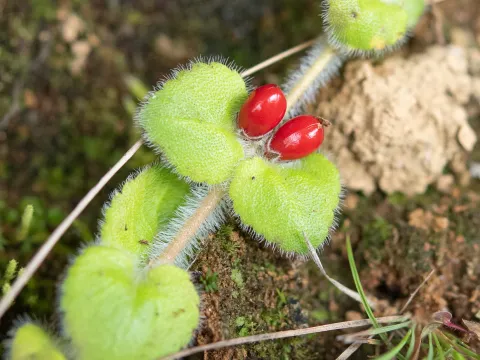
Hemiphragma
Hemiphragma
Hemiphragma is a genus of plants belonging to the Plantaginaceae family. While not a conventional agricultural crop, it serves as a valuable ornamental groundcover, highly appreciated by specialized gardeners for its creeping habit and unique biological characteristics.
What the section contains

Hemiphragma
Native to the high-altitude regions of the Himalayas, China, and Southeast Asia, these plants are well-adapted to cool, humid environments. In their natural habitat, they typically grow in forest understories or rocky outcrops, preferring shaded, protected locations.
Botanically, the plant is characterized by creeping stems that root at the nodes, forming a dense mat of foliage. The most distinct feature is its ability to produce small, vivid, berry-like fruits that provide significant aesthetic appeal after the flowering phase. The foliage is small, often dimorphic, and delicate in structure.
Successful cultivation requires well-drained, acidic to neutral soil enriched with organic matter. Proper drainage is the most vital aspect of the plant's agronomy; avoiding waterlogged conditions is essential, as the roots are highly susceptible to decay in stagnant water.
Climate requirements include protection from extreme heat and direct intense sunlight. Hemiphragma thrives in partial shade with consistent moisture levels. In horticultural practice, it is often treated as an alpine or rock garden plant, requiring a stable microclimate to prevent wilting and heat stress.
The primary threats to Hemiphragma are fungal pathogens, specifically those causing root rot and damping-off, usually triggered by poor drainage or excessive humidity in poorly ventilated areas. Maintaining good airflow is essential to keep the planting healthy.
Slugs and snails are the most frequent pests, as they thrive in the same moist conditions that Hemiphragma prefers. These mollusks can rapidly defoliate the creeping stems, necessitating the use of physical barriers or snail baits to protect the plant mass.
Spider mites can become a problem if the ambient humidity drops or if the plant is kept in an enclosed area with insufficient ventilation. Regular misting and monitoring are recommended to prevent infestations from spreading.
Powdery mildew is another common concern, especially during periods of fluctuating temperatures. Preventive fungicide applications and removing dead or dying tissue are standard practices for managing this disease in specialized nurseries.
Effective pest and disease management for Hemiphragma is based on early detection and maintaining optimal growing conditions. By balancing soil moisture and environmental humidity, growers can minimize the need for heavy chemical treatments and ensure the long-term vigor of the planting.