
Baccaurea dulcis
Baccaurea dulcis (Jacq.) Müll. Arg.
Description
Sowing dates
Propagation of Baccaurea dulcis is primarily achieved through seeds, which must be sown fresh to ensure maximum germination rates. Vegetative propagation, such as grafting, is also employed to maintain consistent cultivar characteristics.
Seeds should be planted in a well-draining, nutrient-rich organic soil medium. Maintaining an ambient temperature of at least 25°C is critical for successful seedling development during the early stages.
Seedlings should be kept in a partially shaded nursery until they are robust enough for field transplanting. Gentle handling of the root system is essential, as the species is sensitive to disturbance.
Baccaurea dulcis, a member of the Phyllanthaceae family, is a slow-growing evergreen tree that typically thrives in the understory of tropical rain forests.
The tree exhibits cauliflory, a phenomenon where both flowers and fruits emerge directly from the trunk and woody branches, which is a distinctive biological feature of the genus.
Growing requirements
This crop requires a humid tropical climate with consistent rainfall throughout the year. It does not tolerate cold temperatures or frost, making it suitable only for specific tropical regions.
Optimal soil conditions include fertile, deep, and well-draining soils with a slightly acidic to neutral pH. Waterlogging must be strictly avoided to prevent root diseases.
While young trees benefit from partial shade to protect them from intense solar radiation, mature specimens generally require full sun exposure to maximize fruit production.
Regular fertilization with organic matter or balanced fertilizers is recommended to maintain the tree's health and support the development of high-quality fruit yields.
Wind protection is advisable, particularly for young trees, to prevent physical damage to the leaves and developing inflorescences.
Yield
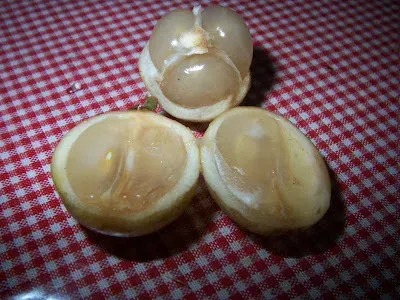
The fruits of Baccaurea dulcis are rounded or slightly flattened berries that change color as they mature. The pulp is translucent, succulent, and highly prized for its sweet, pleasant flavor.
Yields are typically substantial once the tree reaches maturity, provided it receives proper care and grows in an environment that meets its specific ecological needs.
Harvested fruits are primarily consumed fresh, although they are also used in traditional culinary applications within their native growing areas to make preserves or beverages.
The tree's ability to produce large quantities of fruit directly on the trunk makes harvesting relatively convenient for local farmers using simple tools.
As a sustainable crop, it contributes to local food security and serves as a valuable component of agroforestry systems in its endemic regions.
Main diseases and pests
The main threats to Baccaurea dulcis include fungal infections caused by excessive soil moisture and poor drainage. These conditions lead to root rot and premature yellowing of the foliage.
Pests such as scale insects and aphids may infest the succulent young shoots, necessitating regular monitoring and the application of integrated pest management strategies.
Sanitation practices, including the removal of deadwood and infected twigs, are vital for maintaining good airflow through the canopy and reducing disease pressure.
Biological control, such as encouraging natural predators, is a preferred method for managing pest populations without resorting to heavy synthetic chemical use.
Maintaining a healthy, stress-free tree through balanced watering and proper soil management is the most effective way to prevent pest and disease outbreaks.
Harvesting
Harvesting is performed manually by selecting fully ripe fruits, which are identified by their characteristic change in skin color and slight aromatic development.
Since the fruits have a relatively short post-harvest shelf life, rapid handling and local distribution are necessary to preserve their quality for the consumer.
Careful packaging is required to avoid bruising the delicate fruit skin during transport from the orchard to the market.
The harvest period can be spread out over several weeks depending on individual tree variations, requiring multiple visits to the orchard to gather all mature fruits.
Post-harvest quality management ensures that the natural sweetness of the fruit is maintained, providing a high-value product for the local fresh food market.