
Eurya emarginata
Eurya emarginata (Thunb.) Makino
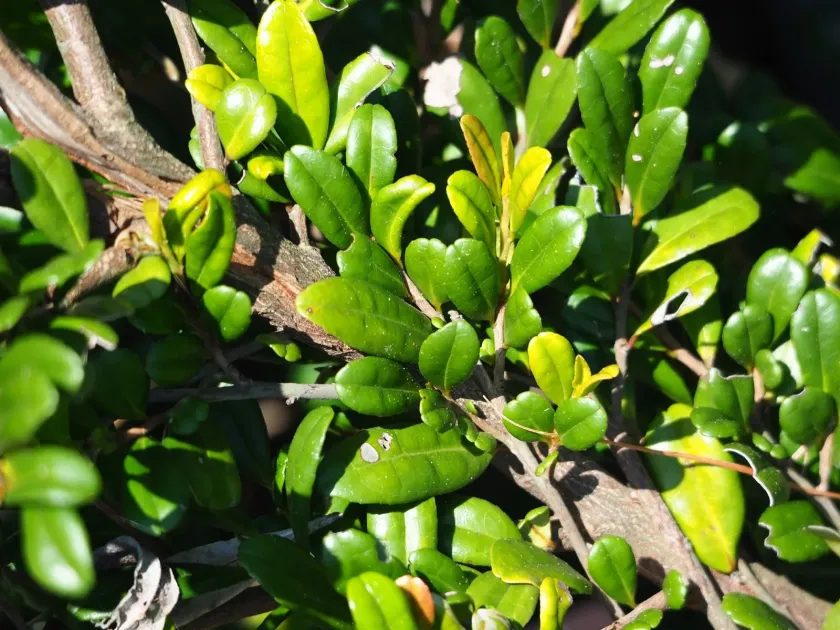
Description
Growing requirements
Eurya emarginata is a sturdy evergreen shrub classified within the Pentaphylacaceae family. It is renowned for its glossy foliage and compact, slow-growing habit which makes it a staple in ornamental horticulture.
Originally native to coastal regions of Japan, Korea, and China, the plant has evolved to withstand saline environments and diverse soil conditions found in maritime zones.
The ideal growing medium for this shrub is a well-drained, slightly acidic soil. Regular application of organic matter helps maintain the required nutrient levels and moisture retention.
In terms of light exposure, the plant prefers partial shade. While it can tolerate more exposure in cooler climates, the harsh afternoon sun in hotter regions can cause leaf scorching.
Maintenance involves periodic pruning to keep the desired shape, as the shrub is often shaped into hedges or used as a structural element in topiary gardens.
Main diseases and pests
Eurya emarginata is generally resistant to most common garden diseases, provided that soil moisture is correctly managed to prevent waterlogging and root issues.
Scales and mealybugs are the most frequent pests observed on these shrubs. These insects typically cluster on the stems and undersides of leaves, draining sap from the plant.
Spider mites can also become a problem in environments with low humidity or insufficient air circulation around the canopy of the plant.
To mitigate these threats, it is advised to ensure proper spacing between plants to improve airflow and facilitate regular inspections for early signs of infestation.
Fungal issues, though less common, may arise during periods of extreme moisture. Applying appropriate fungicides is effective if localized outbreaks occur, but prevention through good culture remains the priority.