
Quintinia
Quintinia
Quintinia is a genus of evergreen trees and shrubs belonging to the family Paracryphiaceae. Known for their lush foliage and elegant growth habit, these plants are primarily native to regions ranging from Australia and New Zealand to the Philippines and New Caledonia.
What the section contains


Quintinia
These plants typically thrive in moist, cool forest environments. They require a stable climate where humidity levels remain relatively high, making them suitable for coastal areas or sheltered garden spots that provide protection from drying winds and harsh afternoon sun.
The soil requirements for Quintinia include well-draining, nutrient-rich substrates with a slightly acidic pH. Proper drainage is absolutely critical, as these plants are highly susceptible to root damage if the soil remains waterlogged for extended periods, especially during the colder months.
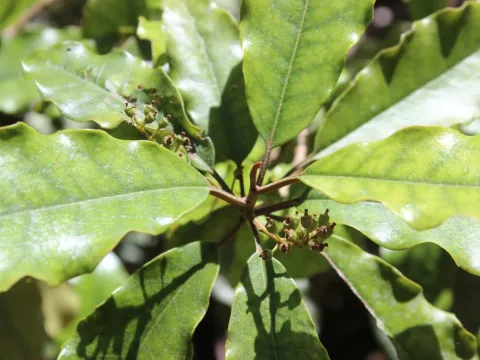
Botanically, Quintinia is characterized by leathery, often glossy leaves with distinct margins. The small, often fragrant flowers are arranged in dense panicles or racemes, providing subtle ornamental value that complements the deep green canopy of the tree throughout the year.
In landscape applications, Quintinia is highly valued for its dense structure and year-round greenery. It is commonly used as a specimen plant, a backdrop in mixed shrub borders, or even as a trimmed hedge in mild climates where its natural habit can be controlled through pruning.
While generally robust when placed in the right environment, Quintinia can be prone to fungal infections, particularly leaf spot and root rot, if air circulation is poor or if the soil is chronically soggy. Ensuring a well-ventilated planting location is key to prevention.
Common pests that might affect these plants include scale insects and mealybugs. These pests hide on the undersides of leaves or along stems, extracting sap and potentially causing stunted growth or yellowing of the foliage if left untreated for long durations.
Management of these threats involves routine visual inspections, especially in spring and early summer. If an infestation is detected, horticultural oils or systemic insecticides can be applied to manage pest populations without damaging the plant's delicate leaf cuticle.
Fungal issues are best managed through cultural practices rather than chemicals. This includes removing fallen leaf litter from beneath the canopy to prevent spore buildup and ensuring that irrigation is applied to the root zone rather than overhead to keep the foliage dry.
Healthy plants grown in optimal conditions will naturally resist most stressors. A balanced fertilization program, tailored to the specific needs of acid-loving plants, will ensure vigorous growth and enhance the tree's ability to withstand minor pest pressures or environmental stress.