
Quintinia serrata
Quintinia serrata
Description
Growing requirements
Quintinia serrata is an evergreen tree species belonging to the family Paracryphiaceae. Native to the forests of New Zealand, this plant is highly valued for its striking foliage and unique growth pattern.
The cultivation of this species requires a temperate climate with high ambient humidity. It thrives best in sheltered positions where it is protected from harsh, direct winds that could damage its leathery leaves.
Soil requirements are quite specific: the plant demands well-drained, acidic, and humus-rich substrate. It performs poorly in heavy clay soils or areas where water tends to stagnate, as the root system is susceptible to decay.
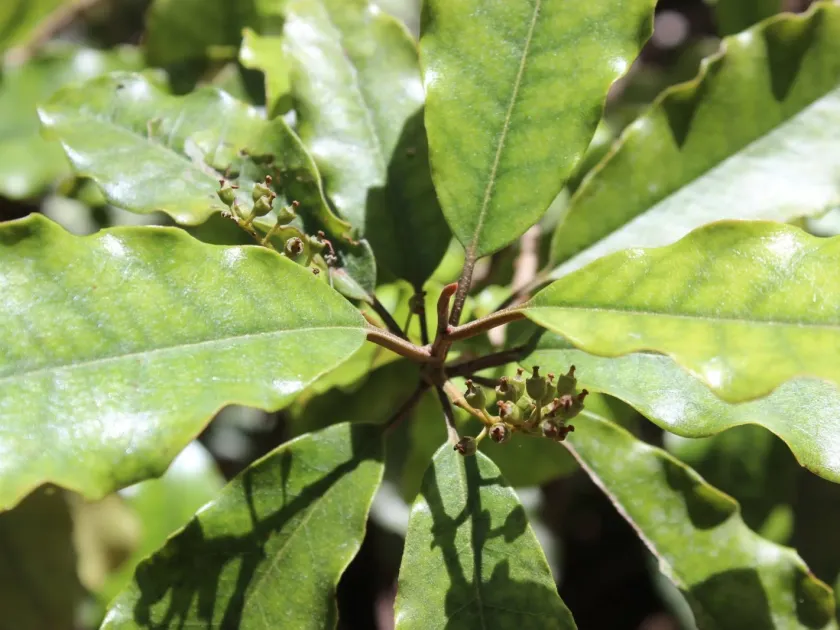
Botanically, it features thick, serrated leaves that often exhibit a glossy finish or fine scales. The small, white-to-pinkish flowers bloom in racemes, providing a subtle but elegant aesthetic during the flowering season.
In terms of practical utility, it is primarily used in ornamental horticulture. It is frequently planted in botanical gardens and upscale landscapes to serve as a specimen tree or a structural component in shaded garden designs.
Main diseases and pests
The primary threats to Quintinia serrata are fungal pathogens, specifically those causing root rot. Ensuring proper irrigation management is critical to maintain the health of the plant throughout the year.
Insect pests such as scale insects may occasionally infest the branches and foliage. Regular monitoring and the application of appropriate horticultural oils or systemic insecticides help keep pest populations in check.
Extreme weather events, including frost or strong gales, pose a risk to the tree's health. In cooler regions, protection from cold winds is necessary to prevent dieback and maintain the integrity of the canopy.
Nutrient deficiency often manifests as chlorosis, where leaves turn pale due to a lack of iron or magnesium. Providing a balanced, acid-loving plant fertilizer helps to maintain a lush, deep green color in the foliage.
Proper pruning is essential to remove deadwood or infected branches, which can serve as entry points for further pathogens. Sanitizing tools between cuts is a recommended practice for maintaining a healthy plantation.