
Roemeria procumbens
Roemeria procumbens
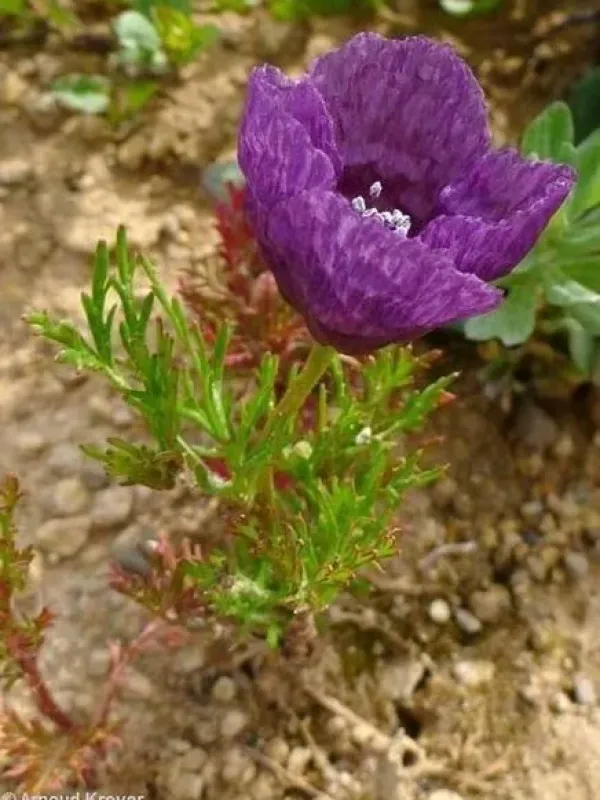
Description
Growing requirements
Roemeria procumbens is an annual herbaceous plant belonging to the Papaveraceae family. In agronomy, it is primarily identified as a weed species that can be found in cereal and pulse fields within arid or semi-arid climatic zones.
The native range of the species covers Southeastern Europe, the Caucasus, and Central Asia. It thrives in open, sun-drenched environments such as steppes, rocky slopes, and abandoned fields where competition for sunlight is low.
The plant exhibits a high degree of xerophytism, allowing it to survive in regions with significant moisture deficits. It requires high solar radiation and stable, well-drained substrate conditions to complete its life cycle effectively.
In terms of soil requirements, it favors light-textured soils such as sandy loams or loams. It does not tolerate waterlogging, as proper soil aeration is crucial for the respiration of its root system during the early growth stages.
From an agricultural standpoint, Roemeria procumbens acts as a competitive weed. Its root system efficiently extracts water and nutrients from the soil, directly impacting the yield potential of surrounding cultivated crops.
Main diseases and pests
Typical pathological threats include fungal infections such as powdery mildew, which can significantly damage the foliage if environmental humidity levels fluctuate during the flowering stage.
Pests affecting this species primarily include leaf-eating insects and various beetles. Additionally, the plant may serve as an alternative host for viruses transmitted by aphids, posing a risk to neighboring commercial crops.