
Roemeria refracta
Roemeria refracta DC.
Description
Sowing dates
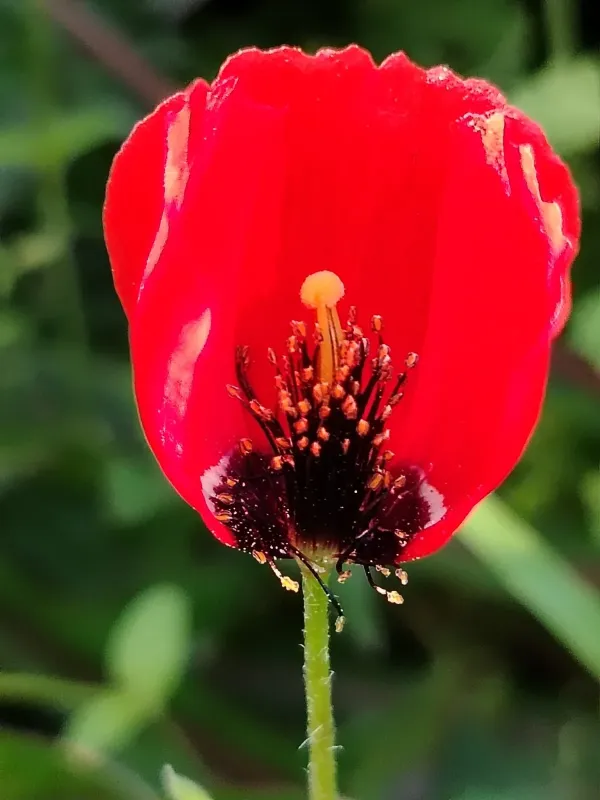
Roemeria refracta, a member of the Papaveraceae family, is an annual herb characterized by its delicate foliage and distinct red flowers. It is primarily propagated by seeds which require specific conditions for optimal germination.
The best sowing time is early spring or late autumn. If sown in autumn, the seeds undergo natural cold stratification, which typically leads to more vigorous seedling emergence during the subsequent spring season.
Seeds are sown at a shallow depth of approximately 1 to 2 centimeters. Because they are tiny, they should be lightly covered with fine soil or compost to maintain moisture without hindering the growth of the sprouts.
Proper spacing is crucial for this species; plants should be thinned to a distance of 15 to 20 centimeters apart within rows. This space allows for sufficient light penetration and airflow, reducing the risk of fungal infections.
As an annual crop, it completes its life cycle quickly. Frequent monitoring of the seedbed is recommended to ensure that the soil remains moist but not waterlogged during the critical germination phase.
Growing requirements
This crop thrives in well-drained, porous soils. It is particularly well-adapted to sandy or light loamy textures. Heavy soils that retain excessive moisture are unsuitable and often lead to root system failure.
Roemeria refracta is highly drought-tolerant and prefers full sun exposure. It requires at least 6 to 8 hours of direct sunlight daily to produce healthy biomass and high-quality flowers.
The plant is not overly demanding regarding soil fertility but performs best in neutral to slightly alkaline pH ranges. Occasional application of low-nitrogen fertilizers can support early-stage growth.
The ideal temperature range for active growth is between +18 and +25 degrees Celsius. It can withstand short periods of heat, provided the soil moisture remains stable, though it dislikes high humidity.
Good air circulation is a primary requirement for cultivation. Placing the plants in an open area with natural breeze significantly reduces the likelihood of foliage diseases and improves overall plant vigor.
Main diseases and pests
The most significant threat to Roemeria refracta is root rot caused by improper drainage or excessive rainfall. Prevention involves careful site selection and the use of raised beds if soil drainage is questionable.
Powdery mildew and various fungal leaf spots can emerge in conditions of high humidity or poor ventilation. Implementing a proper crop rotation strategy helps mitigate the buildup of soil-borne pathogens.
Aphids and spider mites are the most common insect pests. These pests typically attack the soft tissues of the buds and leaves. Monitoring should occur weekly, especially during the early stages of bud formation.
Nematodes can affect the root systems in fields with repetitive cultivation of the same species. Maintaining a diverse crop cycle and avoiding planting in the same patch for more than two consecutive years is advised.
Slugs and snails can cause significant damage to young seedlings during damp spring weather. Protective measures, such as mechanical barriers or traps, are recommended if pest populations exceed economic thresholds.
Harvesting
Harvesting the aerial parts of Roemeria refracta should be timed with the peak of the flowering stage. During this period, the concentration of secondary metabolites is at its highest point.
Plants are harvested by cutting the stems approximately 5 to 10 centimeters above the ground. It is essential to perform the cutting in dry weather to avoid contamination and rapid decay of the plant material.
For seed harvesting, capsules must be collected just before they fully split to prevent loss. The capsules are typically dried further in a controlled environment to ensure the seeds are mature and viable for the next season.
Drying should take place in a shaded, ventilated area with temperatures kept below +40 degrees Celsius. Rapid heat or direct sunlight will degrade the chemical composition of the harvested material.
Once dried, the product should be stored in airtight containers in a cool, dark location. This ensures the shelf life and quality of the raw material are preserved for up to two years under optimal storage conditions.