
Common fumitory
Fumaria officinalis L.
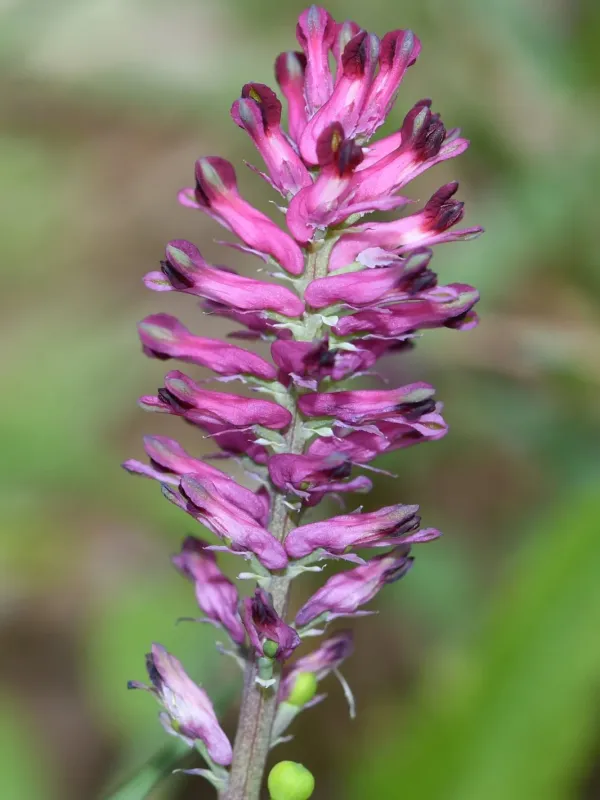
Description
Sowing dates
Common fumitory is an annual plant that is best sown in early spring as soon as the soil has warmed up enough to support germination and steady growth.
The seeds should be planted in rows spaced approximately 30 to 45 centimeters apart, which allows for efficient mechanical weeding and nutrient access throughout the growing season.
Because the seeds are quite small, the planting depth must be limited to 1–2 centimeters, ensuring they remain in contact with moist soil without being buried too deep.
Fall sowing is also an option in regions with mild winters, as the seeds often require a period of cold stratification to achieve optimal and uniform emergence in the spring.
Proper seedbed preparation is critical, as a finely pulverized soil structure significantly improves the success rate of germination for this herbaceous plant.
Growing requirements
Belonging to the Papaveraceae family, Common fumitory thrives in sunny to partially shaded locations, preferring environments with consistent exposure to light for optimal alkaloid development.
The crop is relatively adaptable to various soil types but performs best in well-drained, fertile loamy or sandy soils that provide adequate aeration for the root system.
It requires moderate and consistent moisture, particularly during the vegetative phase, though it is sensitive to waterlogged conditions which can induce root rot and stunted growth.
Common fumitory is well-suited to temperate climates, exhibiting good tolerance to temperature variations common in its native European and Asian habitats.
While the plant does not have extremely high nutritional requirements, balanced fertilization with phosphorus and potassium can enhance flowering and overall herb quality.
Yield
The average harvest yield for the aerial part of Common fumitory typically ranges between 1.5 and 2 tonnes of dried herb per hectare under optimal conditions.
Yield stability is heavily influenced by the ability to manage weed competition during the early stages of plant development, when the crop is most vulnerable.
For seed production purposes, yields typically range from 300 to 500 kilograms per hectare, depending on the quality of the pollination and harvest conditions.
The vegetation period spans approximately 60 to 80 days, allowing for a structured crop rotation schedule where the plant can be integrated into various systems.
Economic profitability is driven by the purity of the raw material, as pharmaceutical processors prioritize high alkaloid content and the absence of extraneous plant matter.
Main diseases and pests
Powdery mildew represents one of the primary fungal threats, particularly when environmental conditions include high humidity and poor airflow within the crop canopy.
Various aphids and leaf-chewing insects can damage the foliage, negatively impacting both the aesthetic quality of the raw material and the plant's overall vigor.
Management strategies involve strict adherence to crop rotation cycles and the physical removal of infected plants to prevent the spread of localized pathogen outbreaks.
- Regular monitoring for signs of pest and disease infestation.
- Implementation of beneficial insect habitats to encourage natural predators.
- Proper crop spacing to maximize air circulation.
Due to the sensitivity of medicinal herbs, chemical pesticide usage is minimized, with emphasis placed on integrated pest management and biological solutions.
Harvesting
Harvesting is performed during the peak of the flowering period, which is when the plant's concentration of active compounds, such as fumarine, is at its highest.
The aerial parts are cut slightly above the soil surface and processed immediately to prevent heating and spoilage, which could degrade the chemical composition.
Drying must be conducted in well-ventilated, shaded environments at temperatures not exceeding 45 degrees Celsius to preserve the essential herbal properties and natural color.
Final processing involves the cleaning of the dried herb to remove thick stems, dirt, or debris, ensuring a high-quality product ready for pharmaceutical extract production.
Storage should be in cool, dry, and dark conditions to protect the herb from humidity and light degradation until it is delivered to the processing facility.