
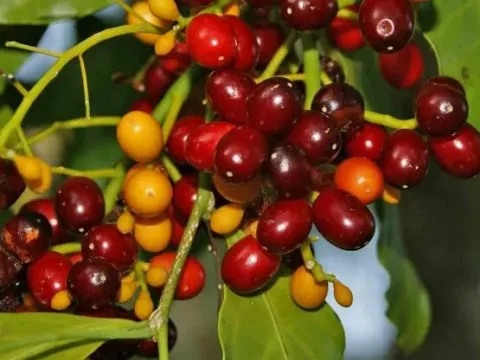
Urobotrya
Urobotrya
The Urobotrya genus belongs to the Opiliaceae family. These are woody plants, shrubs, or small trees native to the tropical regions of Africa and Southeast Asia.
What the section contains

Urobotrya
These plants thrive in humid tropical forests, typically occupying the understory. They have strict requirements for high air humidity and stable temperature conditions throughout the calendar year.
Soil requirements for healthy development include well-drained, fertile loams rich in organic matter. Water stagnation around the root zone is a critical factor and can lead to the rapid decay of the plant's root system.
In the wild, Urobotrya is often observed as a semi-parasitic shrub, attaching itself to the roots of other woody plants to supplement nutrient intake. This biological complexity poses significant challenges for large-scale agricultural cultivation.
Optimal growth conditions necessitate shade, as intense direct sunlight in an equatorial climate can cause leaf scorching and shoot desiccation. Agricultural management requires the careful replication of a forest microclimate.
The economic use of Urobotrya remains largely local, as it is not currently classified as a major agricultural crop. The fruits of certain species are consumed by indigenous populations within their native growth regions.
Biological productivity in the wild is restricted by seasonal fruiting patterns. Yield per individual plant is modest, categorizing the harvest more as gathering rather than controlled industrial production.
The fruits, typically small drupes, are valued for their taste and potential use in traditional medicine. However, the absence of commercial cultivars prevents the standardization and scaling of the harvest process.
At present, comprehensive statistical data regarding the yield of Urobotrya is absent from major agricultural handbooks, reflecting its status as a wild-growing species rather than a commercial commodity.
Future prospects for crop improvement involve nutritional analysis of the fruit, which may eventually transition the species into the niche category of organic exotic foods for global markets.