
Opilia
Opilia
Opilia is a genus of plants belonging to the Opiliaceae family. These are primarily evergreen shrubs or hemiparasitic lianas, native to the tropical regions of Africa, Asia, and Australia, thriving in warm and humid environments.
What the section contains

Opilia
The plant grows best in tropical forests and savannas where stable, high temperatures are maintained year-round. It requires nutrient-rich, well-draining soil and consistent atmospheric humidity to support its active growth and reproductive cycles.
Biologically, the plant is a hemiparasite, meaning its root system attaches to the roots of other trees to absorb water and nutrients. This unique growth habit makes domestic cultivation difficult, as the plant must be co-planted with compatible host species to survive.
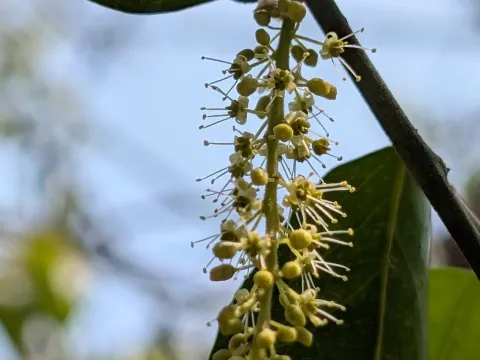
Botanically, Opilia features simple, leathery leaves arranged oppositely along the stems. The small, scented flowers are typically borne in axillary clusters, and upon successful pollination by insects, the plant produces small, fleshy drupe-like fruits.
The economic use of Opilia is currently limited to local consumption and traditional practices. In many parts of Africa, the fruits are collected from the wild as a seasonal food source, and roots are sometimes utilized in local medicinal preparations.
Specific diseases and pests affecting Opilia are not well-documented due to its limited agricultural status. In the wild, the plant is susceptible to certain fungal infections that thrive in high humidity and can lead to leaf spots or stem rot.
Common tropical insects and caterpillars may feed on the foliage, though the plant's parasitic nature often provides it with enough vitality to recover. Managing these threats in a cultivated environment would require strict control over host plant health and moisture levels.