
Urobotrya siamensis
Urobotrya siamensis
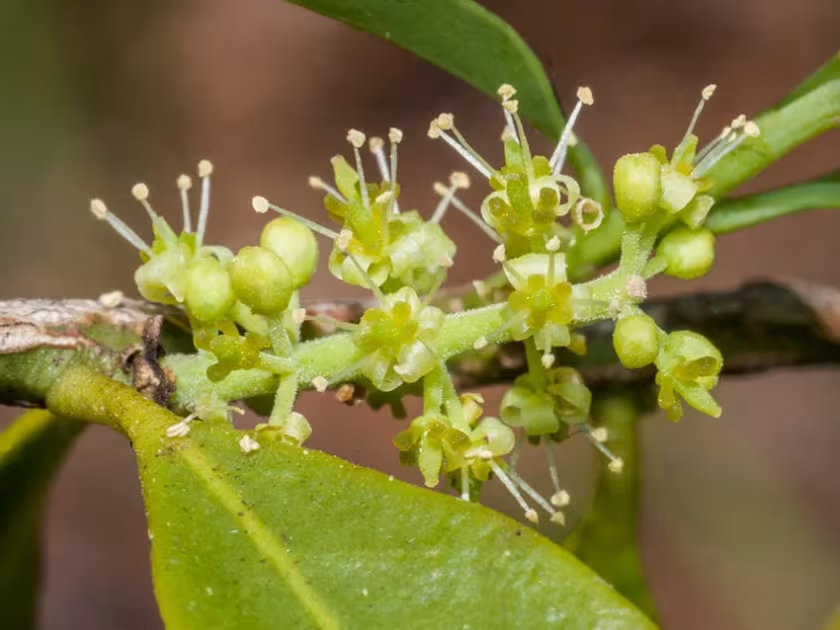
Description
Growing requirements
Urobotrya siamensis is a woody shrub or small tree belonging to the Opiliaceae family, naturally occurring in the tropical rainforests of Southeast Asia.
The plant thrives in humid tropical environments characterized by high annual temperatures and minimal seasonal fluctuations during the growing season.
Successful cultivation requires deep, well-drained, and nutrient-rich soils that are typical of the forest biomes found in Thailand and adjacent regions.
This species exhibits a unique biological cycle regarding flowering and fruit development, relying heavily on local insect pollinators within its native habitat.
In managed agricultural settings, the plant requires specific shading techniques that mimic the understory conditions of a natural tropical forest.
Yield
The economic use of this species is primarily limited to subsistence consumption, where local populations harvest the fruits for traditional food purposes.
Biological productivity is highly sensitive to light intensity and soil moisture, which directly dictate the density and size of the fruit yield.
Currently, the species is not subject to commercial yield standardization, as most harvesting occurs from wild populations rather than established plantations.
The fruits possess a complex biochemical profile, positioning the plant as a subject of interest for potential future applications in food science and pharmacology.
Peak fruit production is observed in mature specimens that receive consistent water availability during the critical phases of reproductive development.