
Opilia amentacea
Opilia amentacea
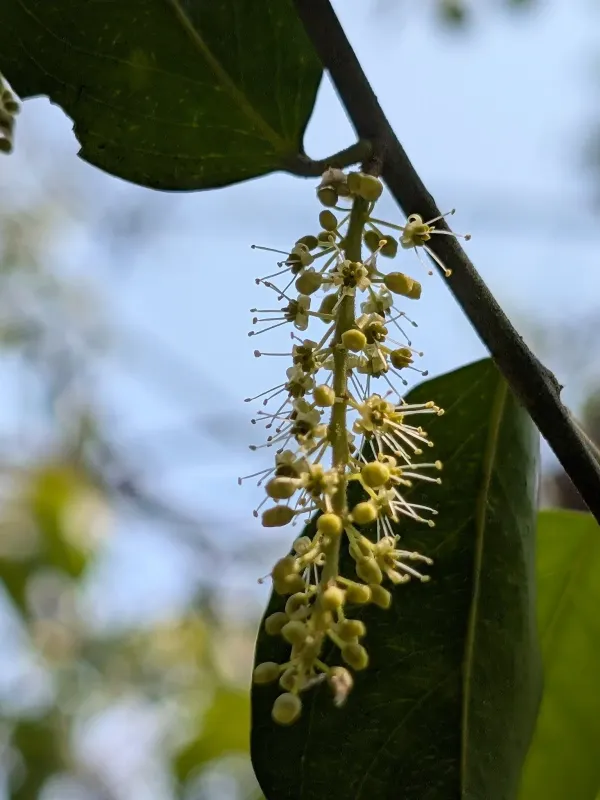
Description
Growing requirements
Opilia amentacea is a perennial woody shrub belonging to the Opiliaceae family. It is widely distributed across the tropical regions of Africa, India, and Southeast Asia, where it thrives in savannahs and open forest environments.
The plant is scientifically classified as a root hemi-parasite. This means that while it possesses leaves for photosynthesis, it also develops specialized root structures (haustoria) to tap into the root systems of surrounding trees, gaining access to water and essential nutrients.
The species prefers tropical climates characterized by high temperatures and distinct dry and rainy seasons. It is highly resilient, capable of surviving periods of water scarcity by utilizing its parasitic relationship with host plants.
For optimal growth, it requires well-drained soil types. It is not overly demanding regarding soil fertility, but it avoids waterlogged conditions, which can lead to root decay and negatively affect the efficiency of its haustorial attachments.
Due to its ecological complexity and reliance on host plants, cultivating Opilia amentacea in controlled agricultural settings is rare. Most utilization of the plant is gathered from natural wild populations by local communities.
Harvesting
The primary economic value of Opilia amentacea lies in its fruit, which is small, oval, and ripens to a vibrant yellow or reddish hue. These fruits are highly valued in local diets as a supplementary source of nutrients and vitamins.
Young leaves are another edible component of the plant. They are typically boiled or prepared in stews, offering a nutritious alternative to traditional leafy vegetables in remote tropical areas where access to diverse food sources is limited.
In traditional ethnomedicine, the plant is extensively used. Extracts from the roots and bark are applied to treat various ailments, including inflammation, wounds, and gastrointestinal issues, owing to its complex secondary metabolites.
Harvesting techniques involve hand-picking the ripe fruits during the peak season. Because the plant is often integrated into complex forest ecosystems, sustainability in harvesting is crucial to avoid damaging the host tree communities.
Future agricultural research may look into the potential of managing wild stands more effectively to increase the yield of these nutritionally significant fruits, promoting food security in regions with harsh climatic constraints.