
Parker's Jasmine
Chrysojasminum parkeri
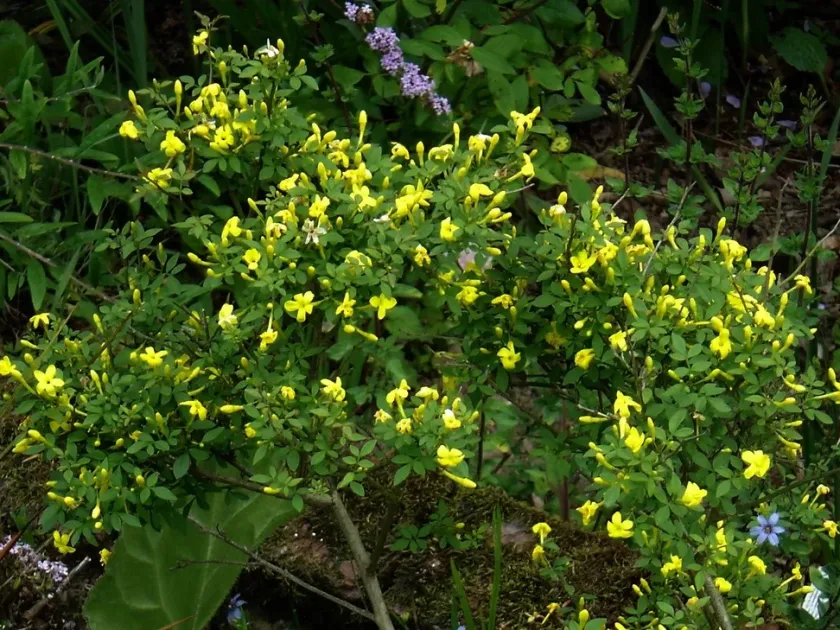
Description
Growing requirements
Parker's Jasmine (Chrysojasminum parkeri) is a compact, evergreen, dwarf shrub belonging to the Oleaceae family. Native to the Himalayan region, it is well-adapted to life in rocky, elevated environments.
The plant features small, trifoliate leaves that create a dense, low-growing mat. During its flowering season, it produces bright yellow, tubular flowers that contrast beautifully with its glossy green foliage.
To thrive, this species requires a location with full sun and excellent drainage. It prefers light, rocky, or sandy soil types that do not retain excess moisture, as its root system is highly sensitive to waterlogging.
In terms of climate, it is suitable for mild temperate zones. In colder areas, it is often grown in containers that can be moved indoors during frost, as the shrub is not considered fully hardy in extreme winter conditions.
Its primary use is ornamental, specifically for rock gardens, low hedges, or slopes where its spreading habit helps stabilize the ground. It is prized for its low maintenance requirements once established in a suitable spot.
Main diseases and pests
Parker's Jasmine is occasionally susceptible to spider mites, particularly in environments with low humidity, which can quickly dehydrate the small leaves of the plant.
Root rot is the most serious threat to its health, almost exclusively caused by overwatering or the failure to provide adequate soil aeration in the planting area.
Scale insects can also colonize the woody stems of the plant, drawing nutrients and weakening the overall vigor if left untreated by appropriate contact or systemic insecticides.
Preventative care involves ensuring good airflow around the branches and strictly managing the irrigation schedule to keep the soil only slightly moist, never saturated.
Regular monitoring of the foliage and stems allows for the early detection of pests, facilitating simpler management before infestations reach critical levels that could stunt growth.