
Italian jasmine
Chrysojasminum humile
Description
Growing requirements
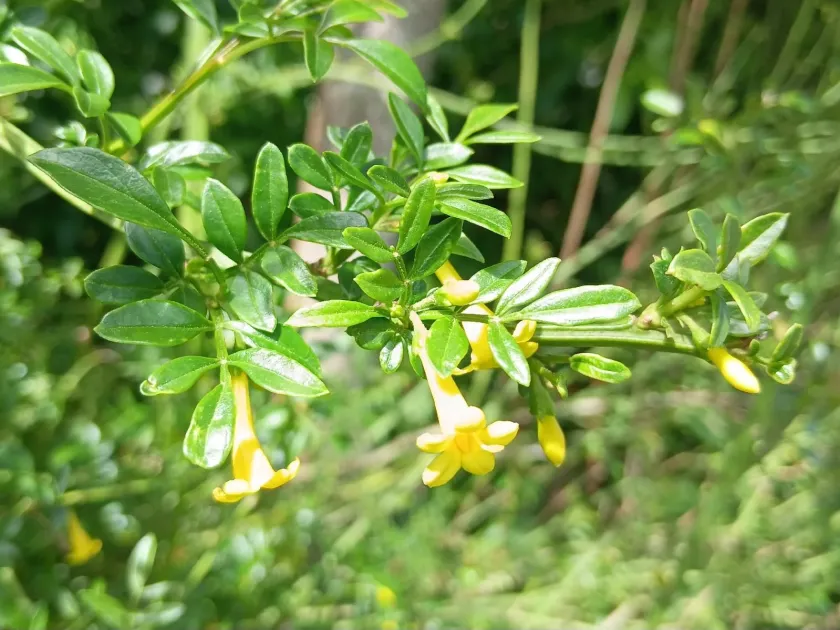
Italian jasmine (lat. Chrysojasminum humile) is a member of the Oleaceae family. This hardy, evergreen to semi-evergreen shrub is highly valued for its compact, bushy growth habit and vibrant, fragrant yellow flowers that bloom throughout the summer months.
Originating from the mountainous regions of Asia, specifically the Himalayas and parts of China, the species has adapted to varied climates. It is best suited for regions with temperate winters, as it thrives in well-ventilated, sunny environments that mirror its native terrain.
The shrub requires well-drained, fertile soil with a slightly acidic to neutral pH level. It performs best in full sun or light dappled shade, provided it is protected from cold, desiccating winds that can damage the delicate foliage during the transition seasons.
Agricultural management involves regular watering during the first growing seasons until the plant is established. Annual pruning is essential to maintain its shape, which should be done immediately after the main flowering flush to ensure new wood develops for the next year.
In landscaping, it is used for borders, specimen plantings, or training against warm walls. Its ability to produce abundant blossoms makes it a favorite for adding color to ornamental gardens and supporting local pollinator populations.
Main diseases and pests
Root rot is the most significant threat to the plant, primarily caused by waterlogged soil. Ensuring a proper drainage layer at the planting site is the most effective preventative measure against soil-borne pathogens.
Pests such as aphids and spider mites are common, particularly in hot, dry environments. Monitoring the underside of the leaves and using insecticidal soaps can help maintain plant health without damaging the ecosystem.
The shrub may struggle during extremely cold winter spells, especially in exposed locations. Applying a generous layer of mulch around the base protects the root system from deep freezes, while burlap wraps help protect the stems.
Nutrient deficiencies, specifically iron or magnesium, can cause leaf yellowing. Regular soil testing and the application of balanced, slow-release fertilizers help keep the foliage a deep, healthy green.
Poor circulation within the canopy may lead to fungal infections during humid periods. Thinning out older, crossing branches improves airflow and reduces the likelihood of developing powdery mildew or other leaf spots.