
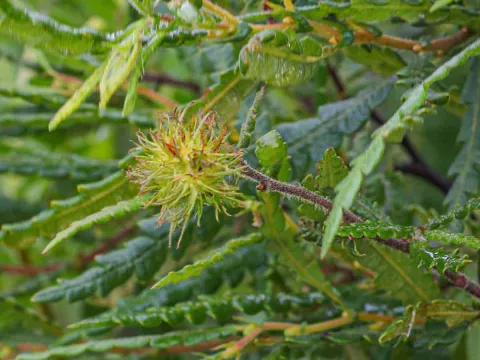
Sweetfern
Comptonia
Propagation of Comptonia is most effectively achieved through division of rhizomes during the dormancy period in early spring or late autumn. This method ensures faster establishment of the plants in their permanent locations.
What the section contains
Sweetfern
Seed propagation requires a period of cold stratification to break dormancy. Sowing the seeds in a nursery bed before winter allows them to experience natural temperature fluctuations necessary for germination.
When planting, it is crucial to provide adequate space for the rhizomatous root system to expand. A spacing of 60 to 90 centimeters is generally recommended depending on the intended use of the planting.
Cuttings taken in mid-summer from semi-hardwood stems can also be used for propagation. Using a rooting hormone and maintaining high humidity levels significantly increases the survival rate of the cuttings.
Initial irrigation is necessary for newly planted specimens to ensure deep root growth, although established plants are highly drought-tolerant and require minimal intervention.
Sweetfern, belonging to the Myricaceae family, is a deciduous shrub native to North America. It is well-known for its fern-like leaves and strong, resinous aroma which is characteristic of the species.
The species is exceptionally well-adapted to nutrient-poor soils, such as sands and rocky substrates. It thrives in acidic environments with a pH range typically between 4.5 and 6.5.
A distinctive biological feature of Comptonia is its ability to fix atmospheric nitrogen via a symbiotic relationship with soil actinomycetes. This allows the plant to flourish in sites where other species would fail.
- Excellent drainage is a primary requirement for cultivation.
- The plant prefers full sun exposure to maintain its compact habit.
- Avoid lime application as it inhibits the essential nitrogen-fixing bacteria.
The shrub is remarkably hardy and resilient, capable of withstanding cold winters and poor soil conditions, making it an excellent candidate for land reclamation and erosion control projects.
The harvesting of sweetfern leaves is conducted during the active growth phase, typically in mid-to-late summer, when the concentration of volatile oils in the foliage is at its peak.
Leaves are collected by pruning small branches, ensuring the plant is not stripped excessively to allow for recovery. The harvested material is then cleaned to remove any debris or discolored parts.
Drying is performed in a shaded, well-ventilated area. Rapid drying is essential to prevent fermentation and to preserve the aromatic compounds that make the plant valuable for medicinal and industrial uses.
In addition to its medicinal properties, sweetfern is utilized in landscaping for its ability to stabilize loose or sandy soils, preventing wind and water erosion in disturbed habitats.
Properly dried leaves can be stored in airtight containers for extended periods without significant loss of their characteristic scent, provided they are kept away from heat and moisture.