
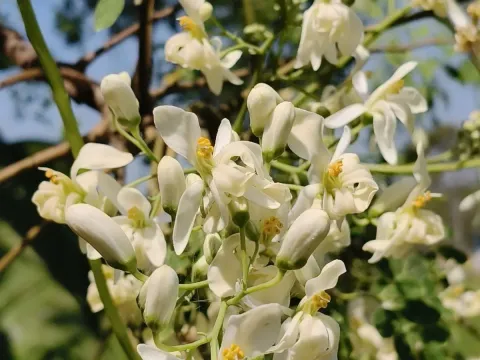
Moringa
Moringa
Moringa oleifera, often known as the drumstick tree, is a hardy, fast-growing species of the Moringaceae family. Seeds are typically sown directly into the soil or in nursery bags for later transplantation.
What the section contains


Moringa
The optimal sowing time aligns with the start of the rainy season to ensure moisture availability. The soil temperature must be warm, as Moringa is sensitive to cold during the germination phase.
Seeds are placed at a depth of 1 to 2 centimeters in well-drained soil. They germinate quickly, usually within one to two weeks, provided the soil remains moist but not waterlogged.
High-density planting is a common practice for commercial leaf production. By keeping trees pruned, farmers can facilitate easier harvesting and increase the yield of nutritious foliage.
The plant demonstrates remarkable growth vigor, often reaching significant heights within its first year, allowing for a quick return on investment for agricultural operations.
Moringa is a tropical crop that thrives in full sun and warm conditions. The ideal temperature range for its cultivation is between 25 and 35 degrees Celsius.
Frost is highly detrimental to the tree, which can cause significant tissue damage or death. Therefore, successful cultivation requires frost-free climates or climate-controlled environments.
The crop is highly adaptable to various soil types, provided they are not waterlogged. It performs best in light, sandy, or loam soils with excellent drainage capabilities.
While Moringa is renowned for its drought tolerance due to its deep taproot, supplemental irrigation is necessary during dry spells to maximize biomass and seed production.
The plant is tolerant of a wide pH range, though neutral to slightly alkaline soils are preferred. Proper soil aeration is essential to prevent root diseases associated with stagnant water.
The yield potential of Moringa depends on whether the goal is leaf production or seed harvesting for oil extraction. Intensive pruning systems significantly boost the annual biomass output.
A single tree can produce several kilograms of leaves annually. In high-density plantations, the total yield of fresh leaves per hectare is remarkably high, making it a valuable cash crop.
Pod production usually begins within the second or third year. A well-maintained plantation can yield a significant quantity of drumsticks, each containing seeds rich in high-quality oil.
Seed-to-oil extraction yields vary depending on the variety, but the oil content is consistently high. This oil is a premium product in the cosmetic and culinary industries.
Consistent management practices, including regular nutrient application and strategic pruning, ensure a sustained yield over a plantation lifespan of more than a decade.
The most significant threat to Moringa is root rot caused by water stagnation or poor drainage. Fungal pathogens such as Pythium and Rhizoctonia are common in such conditions.
Insect pests, including various caterpillars and aphids, can damage young leaves. Regular field monitoring is essential to manage pest populations before they cause widespread damage.
Nematode infestations can occasionally affect trees in sandy soils. Crop rotation and the use of organic soil amendments are effective strategies for mitigating these soil-borne threats.
Preventative maintenance includes ensuring adequate spacing between plants to promote airflow, which is critical in reducing the incidence of leaf and stem diseases.
Integrated pest management, including the use of neem-based oils or other biological controls, is highly recommended to protect the crop without compromising food safety standards.
Leaves are harvested by hand or using mechanical trimmers, focusing on young, tender shoots. This harvesting method encourages the plant to regrow quickly for the next cycle.
For seed harvesting, pods are left on the tree until they are fully dry and brown. This ensures the seeds have reached maximum maturity for the highest oil content.
Post-harvest, pods are cracked open to retrieve the seeds, which are then cleaned and dried in shaded, ventilated areas to maintain their quality and prevent microbial growth.
Leaf drying for powder production is a critical step that requires careful temperature control to preserve the nutritional density, including vitamins and antioxidants.
Efficient post-harvest handling and storage are essential to maintain the commercial value of the crop, especially when the produce is intended for export or processing.