
Moringa oleifera
Moringa oleifera Lam.
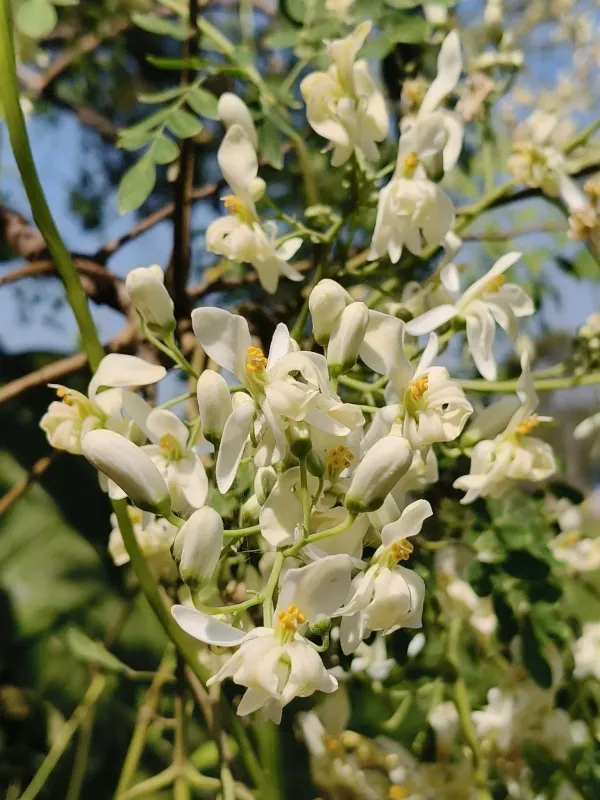
Description
Sowing dates
Moringa oleifera, a member of the Moringaceae family, is typically propagated via seeds. In tropical climates, seeds are sown directly into prepared beds at the start of the rainy season to capitalize on natural irrigation.
For nursery cultivation, seeds are sown in polybags or containers containing a well-drained soil mix. This practice allows for better survival rates and protection against pests before transplanting into the field.
Seeds should be planted at a depth of 1 to 2 centimeters. To improve germination rates, it is advisable to soak seeds in clean water for up to 24 hours prior to sowing, which helps break the dormancy of the seed coat.
Germination usually occurs within 5 to 12 days under optimal temperatures of 25–30 degrees Celsius. Once seedlings reach a height of approximately 30–50 centimeters, they are ready for transplanting into the main production area.
The spacing for sowing depends on the objective: closer spacing is used for intensive leaf production (biomass harvesting), while wider spacing is preferred for optimal fruit and seed yield.
Growing requirements
Moringa is a drought-tolerant, light-loving tree that thrives in full sun. It requires a warm climate with temperatures between 25 and 35 degrees Celsius to reach its full growth potential.
The crop is adaptable to a wide range of soil types, including sandy, loamy, and clay soils, provided they are well-drained. It is sensitive to waterlogged conditions, which can lead to rapid root decay.
It prefers a soil pH between 6.0 and 7.5. While it can survive on relatively poor soils, the application of organic matter or compost significantly enhances growth and overall biomass production.
Although it is highly resistant to drought, regular watering is essential during the early stages of growth and for maximum production in commercial farming operations.
Moringa trees are susceptible to strong winds, which can break the brittle branches. Planting them in sheltered locations or using windbreaks is recommended for high-density commercial plantations.
Yield
Moringa is a multi-purpose crop with high yields of leaves, pods, and seeds. In intensive leaf-production systems, trees are pruned regularly to encourage bushy growth and maximize leaf harvest.
Fresh leaves can be harvested multiple times throughout the year. When dried and powdered, they serve as a potent superfood rich in vitamins, minerals, and antioxidants, commanding high market value.
The pods, often called drumsticks, are harvested when tender for culinary use. For oil extraction, pods are left on the tree to reach full maturity, allowing the seeds to dry out naturally.
Productivity is maintained through rigorous maintenance and scheduled pruning. A well-managed plantation can remain productive for over a decade, providing a consistent source of income for farmers.
The oil derived from seeds, known as ben oil, is highly prized for its stability and cosmetic properties, adding significant economic value to the seed harvest portion of the crop.
Main diseases and pests
Root rot caused by fungal pathogens is the most common threat, usually triggered by excessive irrigation or poor drainage in heavy clay soils. Ensuring proper water management is the key to prevention.
Pests such as hairy caterpillars, aphids, and spider mites can cause significant damage to the foliage. Biological pest control methods are preferred to maintain the organic status of the crop.
Termites can attack the bark and roots of young trees, particularly in arid regions. Regular monitoring and clearing of debris around the base of the trees can help mitigate termite damage.
Leaf spot diseases, caused by fungi like Cercospora, may occur during the rainy season. This necessitates proper plant spacing to ensure adequate air circulation and reduce humidity around the canopy.
Weed control is critical during the first few months of growth, as competing vegetation can easily smother young moringa seedlings and rob them of essential nutrients and light.
Harvesting
Harvesting leaves is performed by manual pruning of the soft terminal branches. This mechanical intervention not only yields the product but also acts as an essential pruning step to manage tree size.
For culinary pods, harvest occurs while the fruit is still immature and soft. If the objective is seed production, harvest is delayed until the pods turn brown and begin to split open.
Post-harvest handling is critical for quality control. Leaves must be dried in shaded, ventilated areas to avoid exposure to direct sunlight, which can cause nutrient and color degradation.
Seeds harvested for oil extraction should be shelled and dried thoroughly in a cool place to prevent mold growth and maintain the quality of the lipids within the seeds.
Given the brittle nature of the wood, workers should use sharp pruning shears rather than breaking off branches by hand to prevent damaging the main stems and introducing potential infection points.