
Moringa drouhardii
Moringa drouhardii Jum.
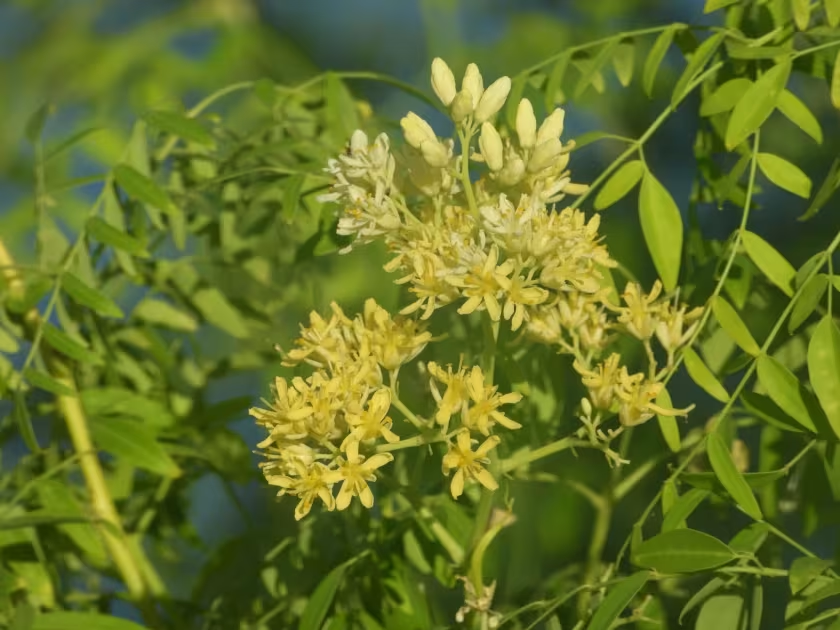
Description
Sowing dates
Moringa drouhardii seeds are best sown at the onset of the rainy season to provide sufficient moisture for initial root development.
The planting medium should be highly porous, consisting of a mix of sand, gravel, and minimal organic matter to prevent water retention.
Seeds are typically placed at a depth of 1 to 2 centimeters in a sunny location with a constant temperature ranging from 25 to 30 degrees Celsius.
Fresh seeds exhibit significantly higher germination rates, as the viability of the seed coat decreases rapidly within a few months of harvest.
During the germination phase, it is vital to maintain consistent but not excessive soil moisture to avoid rotting the developing embryo.
Growing requirements
Belonging to the Moringaceae family, this species is native to the dry forests of Madagascar and is naturally adapted to arid conditions.
The plant thrives in full sun and requires well-drained, nutrient-poor soils, reflecting its evolutionary strategy as a succulent-like tree.
Temperature stability is crucial, as the species is highly sensitive to frost and prolonged periods of cold, which can lead to tissue damage.
Moringa drouhardii benefits from a distinct dry season, during which it may shed its leaves to reduce transpiration and conserve water.
The plant does not require high levels of fertilization; instead, it prefers occasional applications of potassium-rich supplements for structural health.
Yield
The economic potential of Moringa drouhardii is primarily derived from its oil-rich seeds and the nutritional value of its succulent foliage.
Under controlled agricultural conditions, the tree begins to bear fruit after reaching structural maturity, typically within three to five years.
Harvesting efficiency is tied to the tree's growth rate, which is relatively slow compared to other members of the Moringa genus.
Yield components include raw seed oil for industrial uses and processed leaf powder for human and animal nutritional supplements.
Sustainability in yield is achieved by maintaining spacing that prevents canopy shading and competition for limited ground water resources.
Main diseases and pests
Root rot, primarily caused by waterlogged soil conditions, represents the most significant threat to the survival of Moringa drouhardii plantations.
Pests such as scale insects and mealybugs can colonize the branches, leading to a loss of vigor and potential secondary fungal infections.
In humid or stagnant air environments, foliage may be susceptible to powdery mildew, requiring preventive thinning of the canopy.
Physical damage to the succulent trunk can allow entry for pathogens, making it important to avoid mechanical impact during maintenance.
Integrated pest management, focusing on early detection and biological control, is recommended to preserve the integrity of the orchard.
Harvesting
The harvest cycle for Moringa drouhardii begins when the pods turn from green to a dark brown, indicating the drying of the seeds inside.
Pods should be harvested using sharp, clean tools to prevent tearing the branches, as the wood is somewhat brittle during the dry season.
Post-harvest processing involves removing the seeds from the pods and air-drying them in a low-humidity environment to prevent mold growth.
For leaf harvesting, selective pruning of the canopy is performed during the peak of the growing season to ensure quick recovery of the plant.
Proper storage of the harvested materials, especially the oil-containing seeds, is essential to maintain the concentration of bioactive compounds.