
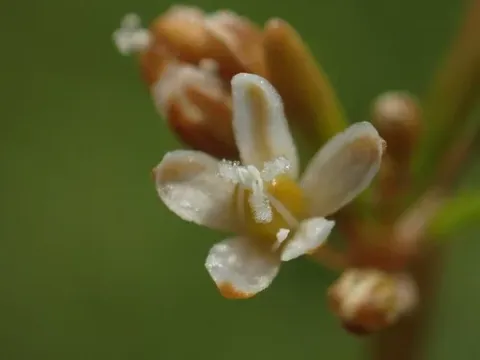
Trigastrotheca
Trigastrotheca
Trigastrotheca, a member of the Rubiaceae family, is primarily found in tropical and subtropical regions. Sowing should be synchronized with the local warm season, as the seeds require consistent thermal energy to initiate germination.
What the section contains


Trigastrotheca
The ideal temperature for sowing is approximately +22 to +25 degrees Celsius. In environments with seasonal rainfall, the planting schedule is best aligned with the beginning of the wet season to ensure sufficient natural moisture during the early establishment phase.
Seeds of Trigastrotheca are typically small, requiring shallow placement in the soil. A seeding depth of no more than 0.5 cm is recommended to ensure that the seedlings have enough energy to break through the surface crust.
Seedbed preparation involves selecting well-drained, porous soil. Incorporating fine organic compost into the top layer provides necessary nutrients and helps maintain the loose structure required for root expansion.
If utilizing a nursery system, transplanting should occur only when the seedlings have developed at least two or three true leaves. This transition phase is critical, and gentle handling of the root system is essential to avoid transplant shock.
Trigastrotheca thrives in well-aerated, sandy or loamy soils. Good drainage is non-negotiable, as the plant is highly susceptible to root rot in waterlogged conditions, making raised beds an effective cultivation strategy in heavier soils.
The plant requires full sun exposure to maintain its vigorous growth cycle and chemical synthesis. Shady locations are generally unsuitable as they result in etiolated plants with reduced biomass and potential for fungal development due to poor evaporation.
Temperature management is straightforward provided the plant is kept in a range between +20 and +30 degrees Celsius. It is highly sensitive to frost, and any exposure to temperatures below +10 degrees Celsius can significantly damage sensitive tissues.
Watering requirements follow a cyclical pattern: soil should remain moist but never saturated. Implementing a managed irrigation program helps maintain steady growth without creating the anaerobic conditions that often lead to plant death.
Nutrient management focuses on balanced NPK applications throughout the vegetative stage. Proper fertilization encourages robust branching, which in turn leads to a higher concentration of the plant’s metabolites, which are often the primary goal of cultivation.