
Bogbean
Menyanthes trifoliata
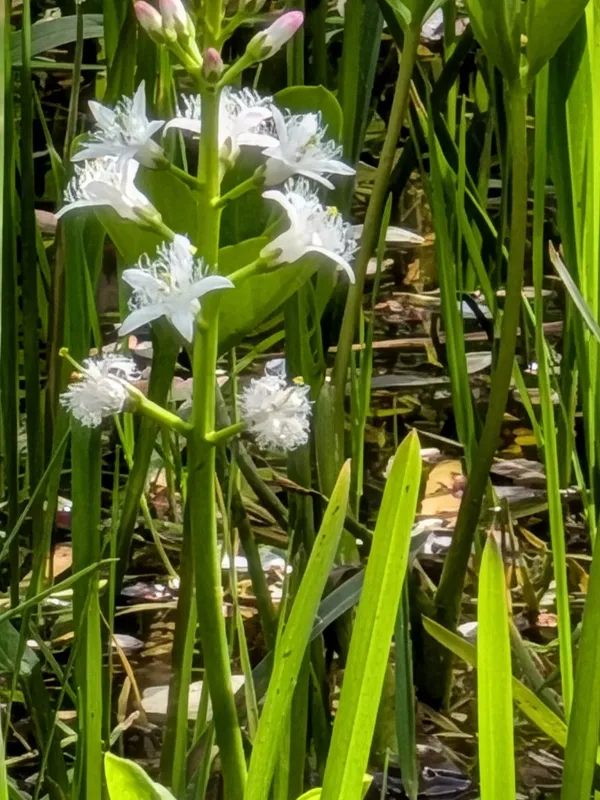
Description
Sowing dates
Bogbean, scientifically known as Menyanthes trifoliata, is typically propagated through vegetative means by dividing established rhizomes. This is the most efficient method for establishing a new production site.
The ideal time for planting is during the early spring as soon as the water thaws, or in late autumn once the plant has completed its vegetative growth phase.
Propagation via seeds is possible but less common in commercial settings due to slower growth rates and the requirement for stratification, which involves mimicking natural winter conditions.
When planting, rhizome fragments must be anchored into the substrate at a depth of 5–10 centimeters to ensure they remain submerged until they develop a strong root system.
Spacing should be managed to allow for rapid expansion, usually planting 3–5 healthy rhizome pieces per square meter, which will naturally fill the pond area over several seasons.
Growing requirements
As a member of the Menyanthaceae family, Bogbean is a true hydrophyte that thrives in wetlands, bogs, and shallow water margins. It is highly dependent on a consistent aquatic environment.
The crop prefers shallow, nutrient-rich or acidic water with depths ranging from 10 to 30 centimeters. The substrate should consist of peaty, muddy, or organic-rich soil.
Light exposure is a critical factor; Bogbean requires full sun to partial shade for optimal growth. Insufficient sunlight will lead to spindly growth and reduced concentrations of active chemical compounds.
The plant is extremely hardy and cold-tolerant, capable of surviving through severe winters by entering a dormant state under the ice and snow of its natural habitat.
For best results, the water and soil pH should be maintained between 4.5 and 6.5, which mirrors the environment of transitional fens where this species naturally flourishes.
Yield
The yield of Bogbean leaves is heavily dependent on the stability of the aquatic environment and the density of the planting. Under managed conditions, this crop can be quite productive.
Primary harvesting targets the leaves, which are rich in bitter glycosides and flavonoids. A well-maintained plantation can yield several hundred kilograms of dry leaves per hectare annually.
Maximum productivity is usually reached 3–4 years after initial planting, once the rhizomatous mat is fully established and capable of supporting vigorous vegetative reproduction.
Harvesting is labor-intensive and performed by hand to ensure only mature, healthy leaves are selected. This selective harvesting maintains the health and longevity of the plantation.
Proper post-harvest processing, specifically rapid and controlled drying at temperatures below 50 degrees Celsius, is essential to maintain the quality and pharmacological value of the product.
Main diseases and pests
Bogbean is generally resilient to pests and diseases due to its specialized aquatic habitat. It does not suffer from the common pathogens that affect traditional field crops.
The greatest threat to a Bogbean plantation is a change in the hydrological regime, such as excessive drainage, drying out of the pond, or fluctuating water levels that expose the rhizomes.
Insect pests, including various leaf-eating beetles, may occasionally appear, but they are rarely a cause for alarm unless a large-scale outbreak occurs in the ecosystem.
Competition from aggressive wetland plants like reeds or cattails can be problematic, so periodic weeding is necessary to prevent these species from choking out the Bogbean crop.
Maintaining clear, clean water and ensuring the pond does not become stagnated or overly polluted is key to preventing stress-induced diseases in the plant population.
Harvesting
The harvest season for Bogbean leaves takes place after the flowering period, typically starting in late June and continuing through August for optimal potency.
It is strictly prohibited to pull the entire plant including the roots, as this destroys the plantation. Harvesters must use sharp shears to cut the leaves, leaving the rhizome untouched.
Harvested material should be kept in ventilated containers and dried immediately. If leaves are stored in large, dense piles, they may heat up and spoil, leading to a loss of medicinal active ingredients.
The drying process should occur in a shaded, well-ventilated area to preserve the natural green color, which is a standard requirement for premium quality herbal products.
With careful stewardship and adherence to these harvesting protocols, a Bogbean plantation can remain productive for up to seven years before requiring renovation.